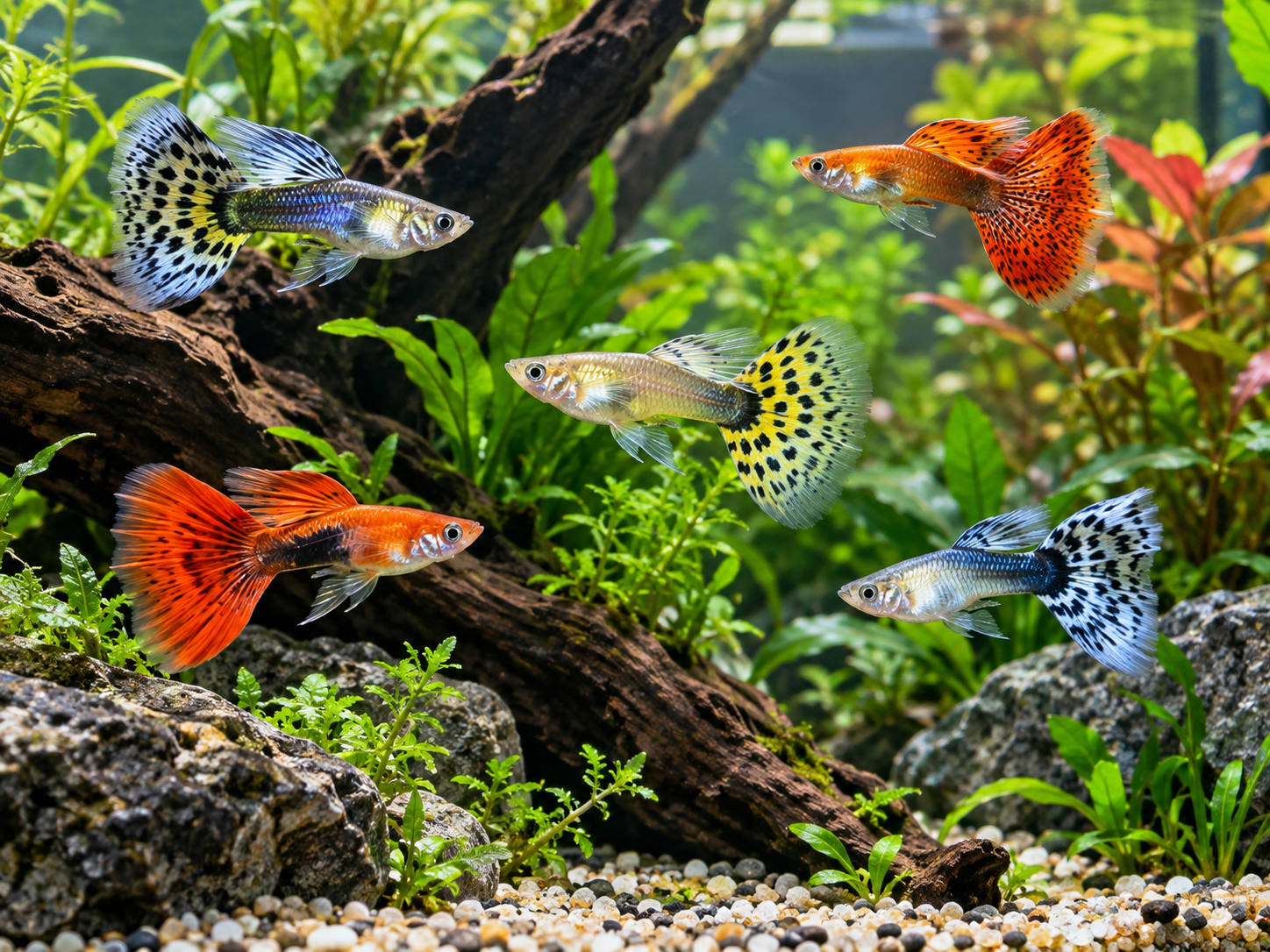

Guppies are omnivores, so they need a varied diet with both protein and plant-based foods. Feeding them well supports healthy growth, brighter colors, active behavior and, if you keep males and females together, healthy fry. It also helps keep the water clean.
In short: feed adult guppies a quality small flake or micro pellet once or twice a day, adding frozen or live foods like brine shrimp and daphnia a few times a week. Give only what they can finish in about a minute or two, and feed fry smaller meals more often.
What should guppies eat?
A good-quality tropical fish flake or micro pellet can form the base of your guppies’ diet. Guppies have small mouths, so choose a food small enough for them to eat easily, or crush flakes slightly between your fingers.
Because guppies eat plant matter as well as tiny animals in the wild, it helps to include some plant-based food too. A flake containing spirulina, or small amounts of blanched vegetables such as shelled peas or zucchini, gives them extra fiber and nutrients.
| Food | How often |
|---|---|
| Quality flake or micro pellets | Daily, as the staple food |
| Frozen or live foods (brine shrimp, daphnia) | A few times a week |
| Bloodworms | Occasionally, as a treat |
| Plant-based foods (spirulina flake, blanched peas or zucchini) | A few times a week |
Add variety
Small portions of frozen, live or freeze-dried foods add useful protein and variety, and guppies usually love them. Good options include:
- Brine shrimp
- Daphnia, which can also help with digestion
- Bloodworms, in moderation, as they’re rich
- Quality micro pellets
Thaw frozen foods in a little tank water before feeding. Freeze-dried foods can be soaked briefly first, which makes them easier to digest. Buy live foods from a reliable source, as they can carry disease.
Don’t overfeed
Overfeeding is one of the most common mistakes with guppies. Offer only what they can finish in about a minute or two, and remove anything left over. Uneaten food breaks down quickly, raising ammonia and making the water unhealthy. Too much food can also cause bloating and constipation.
It’s normal for guppies to act hungry all the time, so don’t use their begging as a guide to how much to feed.
How often should guppies eat?
| Age | How often | What to feed |
|---|---|---|
| Fry (newborn to a few weeks) | Several small meals a day, often 3–5 | Finely crushed flake, powdered fry food or baby brine shrimp |
| Juveniles | 2–3 small meals a day | Crushed flake, micro pellets and small frozen foods |
| Adults | 1–2 small meals a day | Flake or micro pellets, plus frozen or live foods a few times a week |
Some keepers skip feeding one day a week for adult guppies, which can help digestion. Adult guppies can also go a few days without food, so a short weekend away isn’t a problem. For longer trips, a trusted person who measures portions is safer than a slow-release “vacation feeder,” which can foul the water.
If you keep males and females together, expect fry. Adult guppies often eat their young, so plenty of fine-leaved plants or floating plants gives newborn fry somewhere to hide.
Watch their condition
Healthy guppies are active, eager at feeding time and have a normal, gently rounded body shape. Watch for:
- Poor appetite or spitting out food
- A thin or sunken belly, or weight loss despite eating
- A swollen belly with raised scales
- Stringy white droppings
- Unusual swimming, clamped fins or hiding
Remember that pregnant females naturally develop a larger, squarer belly and a dark gravid spot near the rear, which is normal. If you see any of the signs above, test your water first, then ask a fish vet or an experienced aquatic store for advice.
Good feeding supports good water quality
A balanced diet and careful portions help both your fish and your aquarium. Small, consistent meals are much better than large or irregular ones. Store flake food in a sealed container in a cool, dry place, and replace it every few months, as its vitamins break down over time.
If your guppies start hanging at the surface, our guide on why fish gasp at the surface explains the most common causes.
Frequently asked questions
What is the best food for guppies?
A quality small tropical flake or micro pellet makes a good staple, ideally one that includes some plant content such as spirulina. Add frozen or live foods like brine shrimp and daphnia a few times a week for variety.
How often should I feed my guppies?
Adult guppies usually do well with one or two small meals a day. Juveniles need two to three meals, and fry do best with several small meals throughout the day.
How much should I feed guppies?
Only feed what your guppies can finish in about a minute or two, and remove any leftovers. Overfeeding pollutes the water and can cause bloating.
How long can guppies go without food?
Healthy adult guppies can usually go a few days without food, so a short weekend away is fine. For longer trips, ask someone to feed small, measured portions rather than relying on a vacation feeder.