
Learning how to cycle an axolotl tank is one of the most important parts of preparing for a new axolotl. A freshly filled aquarium may look clean, but it does not yet have enough beneficial bacteria to process the waste an animal will produce.
Cycling establishes the biological filtration that converts harmful ammonia into nitrite and then into nitrate. The process often takes several weeks, and the tank should be judged by water-test results rather than by how long it has been running.
What Does Cycling an Axolotl Tank Mean?
Waste in an aquarium eventually produces ammonia. Ammonia is harmful to aquatic animals, but naturally occurring bacteria can convert it into nitrite. A second group of bacteria then converts nitrite into nitrate.
This process is known as the nitrogen cycle. Once enough beneficial bacteria are established in the filter and other aquarium surfaces, the system can process waste much more safely.
| Stage | What Happens |
|---|---|
| Ammonia | Waste breaks down and creates ammonia, which is harmful to aquatic animals. |
| Nitrite | Beneficial bacteria begin converting ammonia into nitrite, which is also harmful. |
| Nitrate | Other beneficial bacteria convert nitrite into nitrate, which is managed through regular aquarium maintenance and water changes. |
What You Need Before You Begin
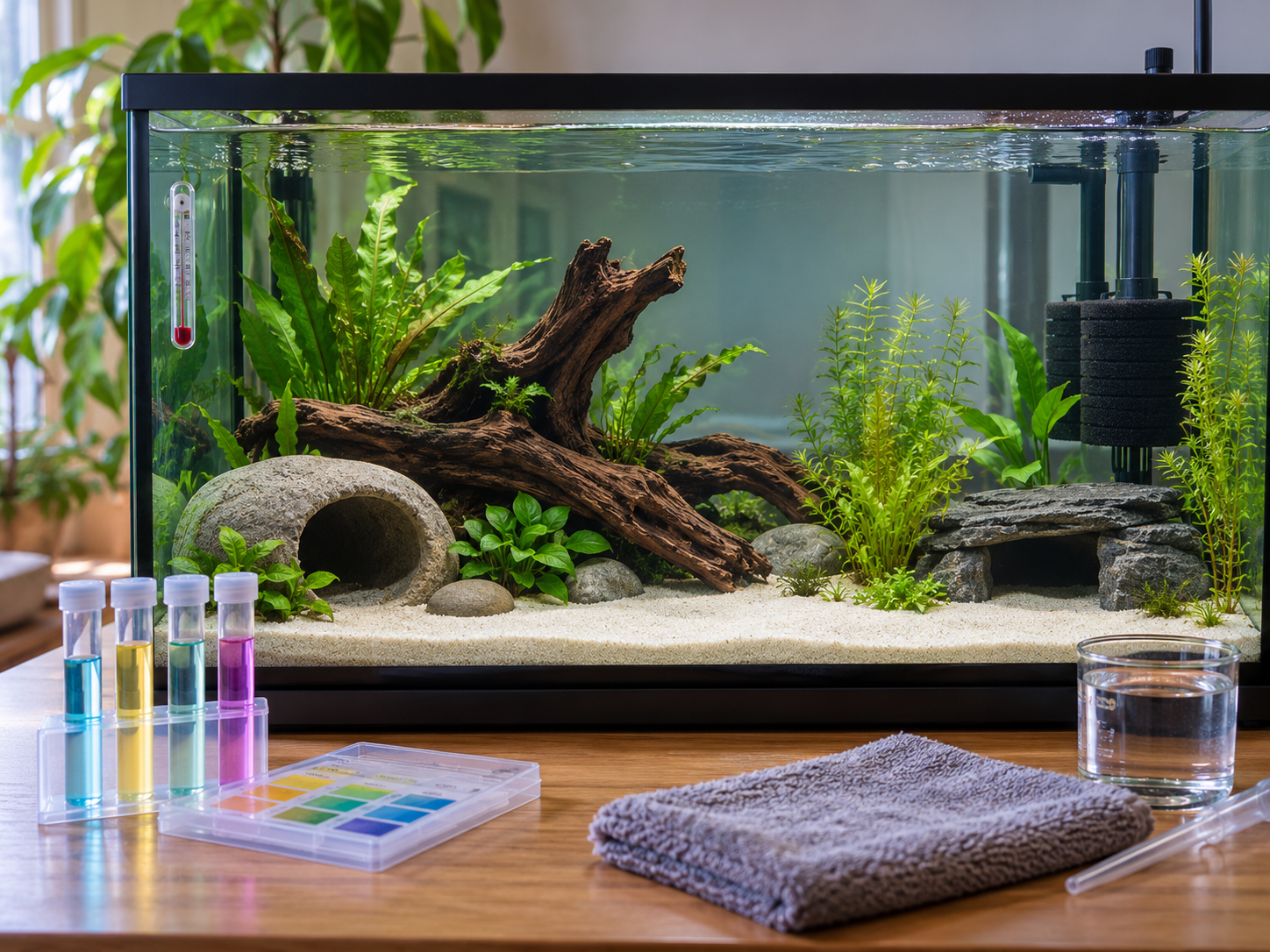
Set up the aquarium as though the axolotl were going to live in it, but leave the animal out during the cycling process.
- An appropriately sized axolotl aquarium
- A filter with gentle water flow
- A reliable aquarium thermometer
- Water conditioner suitable for removing chlorine or chloramine
- A reliable test kit for ammonia, nitrite, nitrate and pH
- A controlled ammonia source intended for fishless aquarium cycling
- Hides and other permanent tank furnishings
If you use an aquarium cycling product or ammonia source, follow the manufacturer’s instructions carefully rather than guessing the dose.
How to Cycle an Axolotl Tank Step by Step
Step 1: Set Up the Complete Aquarium
Install the filter, thermometer, hides and other permanent equipment. Fill the aquarium with water and treat tap water appropriately to remove chlorine or chloramine.
Start the filter and keep it running continuously. The bacteria you are trying to establish will colonize the filter media and other surfaces inside the aquarium.
Step 2: Add a Controlled Ammonia Source
Beneficial bacteria need an ammonia source before an axolotl is present. A purpose-made aquarium product intended for fishless cycling is easier to control than relying on an animal to produce waste.
Follow the product directions carefully. Do not use household cleaning products or scented ammonia solutions.
Step 3: Begin Testing the Water
Test ammonia, nitrite and nitrate regularly and keep a simple record of the results. Testing lets you see the cycle developing instead of trying to judge it from the appearance of the water.
At first, ammonia may be detectable while nitrite and nitrate remain low or absent.
Step 4: Watch for Nitrite
As the first bacterial population develops, ammonia should begin to be processed and nitrite will appear.
Nitrite is not a sign that the tank is ready. It is an expected stage of the developing biological cycle and must also fall to a safe level before an axolotl is introduced.
Step 5: Watch for Nitrate
As another bacterial population becomes established, nitrite is converted into nitrate. Seeing nitrate alongside declining ammonia and nitrite is evidence that the biological filter is developing.
Continue following your chosen fishless-cycling method and keep testing rather than stopping as soon as nitrate first appears.
Step 6: Confirm Ammonia and Nitrite Return to Zero
An established axolotl aquarium should have no detectable ammonia or nitrite. Both are potentially harmful and should read 0 ppm before the animal is introduced.
The important point is that the biological filter can process the waste source consistently. One reassuring test result at the beginning of the process is not enough to prove that the tank is cycled.
How Long Does an Axolotl Tank Take to Cycle?
There is no exact number of days that guarantees a tank is ready. Biological filtration takes time to develop, and the process can vary with the aquarium, filter, water chemistry, bacterial starter and cycling method.
New aquariums commonly need several weeks to develop a functioning biological filter. Rather than choosing an arrival date for your axolotl and hoping the tank is ready by then, wait for the water-test results to confirm that cycling is complete.
What Should the Water Tests Show?
For an established axolotl aquarium, ammonia and nitrite should not be detectable. Nitrate is the final product of the biological cycle and is managed through routine maintenance and partial water changes.
| Test | Before Adding the Axolotl |
|---|---|
| Ammonia | 0 ppm |
| Nitrite | 0 ppm |
| Nitrate | Present but controlled at an appropriate level through water changes |
| pH | Stable and suitable for axolotl husbandry |
Axolotl-specific veterinary guidance recommends keeping nitrate low rather than allowing it to accumulate. If nitrate is elevated after cycling, perform an appropriate partial water change before bringing the axolotl home.
Why Water Conditioner Matters
Chlorine and chloramine can harm amphibians and can also interfere with the biological community you are trying to establish.
Treat tap water with a suitable conditioner whenever required by your local water supply. If you are unsure whether your water contains chlorine or chloramine, check with your water provider or test the water rather than assuming.
Can Bottled Bacteria Speed Up Cycling?
Aquarium bacterial starter products are designed to introduce beneficial bacteria and may help establish biological filtration. Mature filter media from a healthy, disease-free established aquarium can also introduce an existing bacterial population.
Neither method removes the need for testing. A bacterial product does not prove that the aquarium is ready for an axolotl; ammonia and nitrite still need to be monitored until the tank demonstrates stable biological filtration.
Do Not Replace or Sterilize the Filter During Cycling
Much of the aquarium’s beneficial bacterial population lives on filter media and other surfaces rather than floating freely in the water.
Replacing all filter media, allowing it to dry out or aggressively sterilizing the filtration system can disrupt the developing biological cycle. Follow the filter manufacturer’s maintenance instructions and preserve established biological media whenever possible.
Common Axolotl Tank Cycling Mistakes
- Adding the axolotl before ammonia and nitrite have returned to 0 ppm
- Assuming clear water means the tank is safe
- Waiting a fixed number of days without testing the water
- Using an uncontrolled or unsuitable ammonia source
- Forgetting to treat chlorinated or chloraminated tap water
- Stopping the process as soon as nitrate first appears
- Replacing all filter media during the cycle
- Letting the filter remain switched off for long periods
- Adding an animal to create ammonia instead of using a fishless method
Final Checks Before Bringing Your Axolotl Home
Cycling is essential, but it is not the only thing that needs to be ready. Before introducing the axolotl, check the complete setup once more.
- Ammonia reads 0 ppm.
- Nitrite reads 0 ppm.
- Nitrate is controlled.
- The water has been properly dechlorinated.
- The aquarium temperature is cool and stable.
- The filter is working without producing excessive current.
- Hiding places are secure and free from sharp edges.
- No swallowable gravel or unsafe décor is present.
Frequently Asked Questions
Can I cycle an axolotl tank with the axolotl inside?
A fishless cycle is the safer approach. Cycling with an axolotl present can expose the animal to ammonia and nitrite while the biological filter is still developing.
How do I know when an axolotl tank is cycled?
The aquarium should demonstrate an established biological cycle with no detectable ammonia or nitrite and controlled nitrate. Do not rely only on how long the filter has been running.
Does adding bottled bacteria mean the tank is instantly ready?
No. A bacterial starter may help establish the biofilter, but water testing is still needed to confirm that ammonia and nitrite are being processed reliably.
Why is there nitrite in my tank during cycling?
Nitrite appears as bacteria begin converting ammonia. It is a normal stage of the nitrogen cycle, but it is still harmful and must return to 0 ppm before the axolotl is introduced.
Should nitrate be zero in a cycled aquarium?
Not necessarily. Nitrate is produced as part of the biological cycle. The goal is to keep it controlled through appropriate aquarium maintenance rather than allowing it to accumulate.
Continue Learning About Axolotl Care
Final Thoughts
To cycle an axolotl tank properly, give the biological filter time to establish, provide a controlled ammonia source and test the water throughout the process. You should see the system progress from ammonia to nitrite and then nitrate as beneficial bacteria develop.
Do not bring the axolotl home until ammonia and nitrite are consistently undetectable and the rest of the aquarium is ready. A few extra days of preparation are far easier to manage than an emergency caused by an immature tank.
Sources and Further Reading
- LafeberVet — Care of the Axolotl
- Merck Veterinary Manual — Management of Aquarium Fish
- MSD Veterinary Manual — Environment and Husbandry for Amphibians
- RSPCA — Setting Up and Cycling a New Aquarium