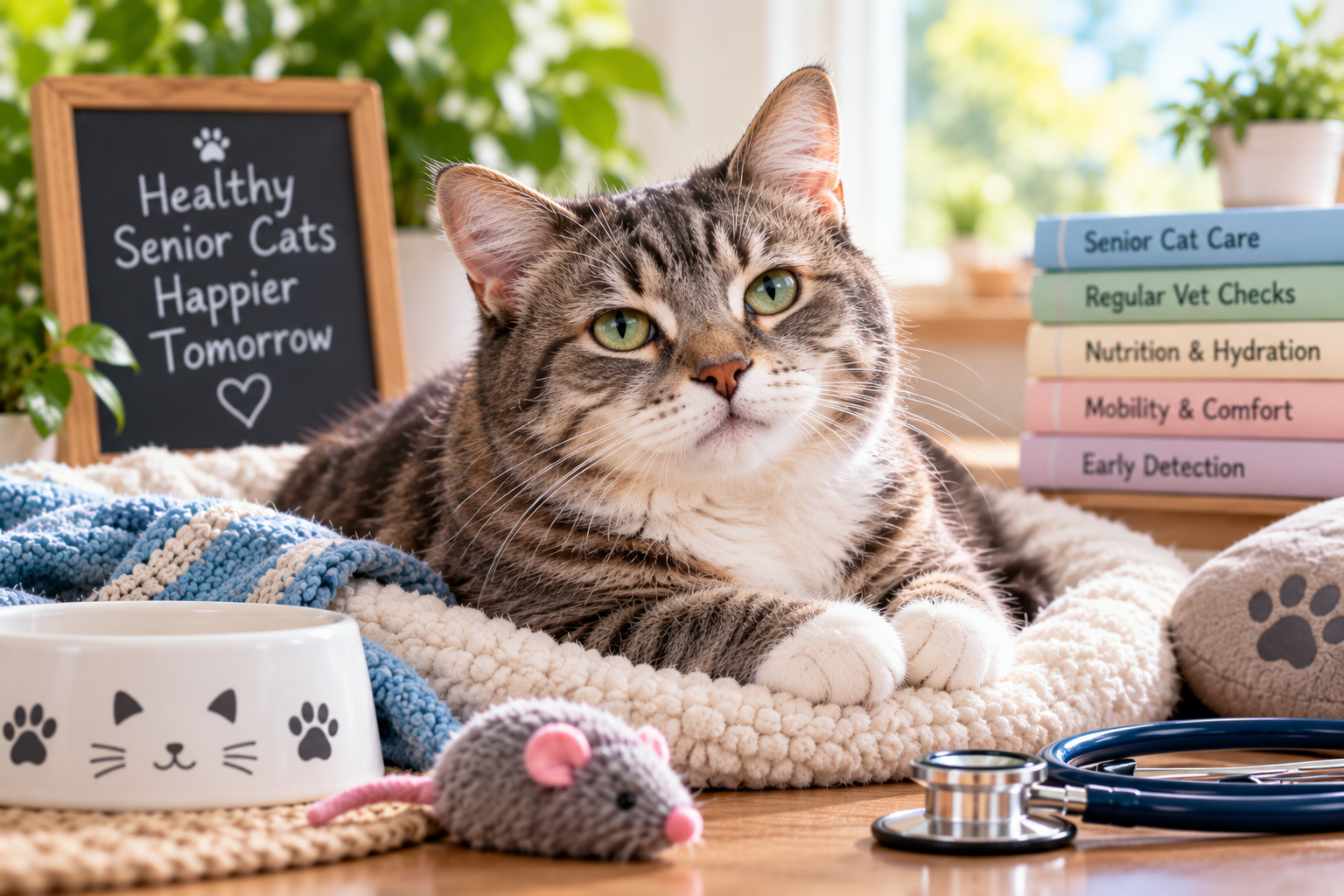

Common health problems in senior cats often begin with small changes. An older cat may drink a little more, lose some weight, hesitate before jumping, groom less carefully or start waking the household at night.
These changes can be easy to dismiss as normal aging. However, aging itself is not a diagnosis. Kidney disease, hyperthyroidism, arthritis, dental disease, diabetes, high blood pressure and other medical conditions become more important as cats grow older.
Recognizing changes early gives your veterinarian a better opportunity to identify and manage disease before it becomes more advanced.
Common Senior Cat Health Problems at a Glance
| Health Problem | Possible Early Signs | Why It Matters |
|---|---|---|
| Chronic kidney disease | Increased thirst and urination, weight loss, reduced appetite or poor coat. | Kidney function can decline gradually before obvious illness develops. |
| Hyperthyroidism | Weight loss, strong appetite, increased thirst, restlessness or vomiting. | Excess thyroid hormone can affect the heart, blood pressure and other organs. |
| Arthritis | Reduced jumping, stiffness, litter-box difficulty and less grooming. | Joint pain is common in older cats but may be subtle. |
| Dental disease | Bad breath, chewing changes, drooling, weight loss or reduced grooming. | Dental disease can cause significant chronic pain. |
| Diabetes mellitus | Increased thirst and urination, weight loss and appetite changes. | Untreated diabetes can lead to serious metabolic illness. |
| Hypertension | Often no obvious early signs; sudden blindness or neurologic changes can occur. | High blood pressure can damage the eyes, kidneys, brain and heart. |
| Heart disease | Reduced activity, rapid breathing, weakness or breathing difficulty. | Heart disease may remain hidden until significant changes develop. |
| Chronic digestive disease | Vomiting, diarrhea, poor appetite, weight loss or muscle loss. | Several intestinal and systemic diseases can cause similar symptoms. |
| Cancer | New lumps, unexplained weight loss, appetite changes or persistent illness. | Signs vary widely depending on the tissue or organ involved. |
| Cognitive dysfunction | Nighttime vocalization, confusion, altered sleep or changes in social behavior. | Medical causes should be ruled out before assuming cognitive decline. |
When Is a Cat Considered Senior?
Current AAHA/AAFP feline life-stage guidance generally places cats older than about 10 years in the senior life stage.
However, biological aging varies between individual cats.
A healthy 11-year-old cat may behave very differently from another cat of the same age that already has several chronic diseases.
For that reason, veterinary care should be based on:
- Age
- Body condition
- Muscle condition
- Medical history
- Current medications
- Lifestyle
- Laboratory results
- Changes noticed at home
Normal Aging vs Signs of Disease
Some changes occur naturally with age, but many changes that owners consider “normal aging” can actually reflect treatable disease.
For example, an older cat should not automatically be expected to:
- Lose significant weight
- Stop jumping because of pain
- Drink much more water
- Urinate much more frequently
- Develop persistent vomiting
- Stop grooming
- Become chronically constipated
- Develop severe bad breath
- Become suddenly confused
- Lose vision suddenly
When a change appears, it is safer to ask why it is happening rather than assume age alone explains it.
1. Chronic Kidney Disease in Senior Cats
Chronic kidney disease, often shortened to CKD, is one of the most important diseases affecting older cats.
Healthy kidneys help:
- Filter waste products from the blood
- Produce urine
- Balance water and electrolytes
- Help regulate blood pressure
- Support red blood cell production
With CKD, kidney function gradually declines.
Early Signs of Kidney Disease
Early CKD may cause few obvious symptoms.
As kidney function changes, owners may notice:
- Drinking more water
- Producing larger urine clumps
- Weight loss
- Reduced appetite
- Lower energy
- Poor coat condition
Later signs may include:
- Nausea
- Vomiting
- Dehydration
- Weakness
- Muscle loss
- Pale gums from anemia
Why Increased Thirst Matters
As the kidneys lose some ability to concentrate urine, an affected cat may produce larger amounts of dilute urine.
The cat then drinks more water to compensate.
This is why a senior cat that suddenly seems to spend more time at the water bowl deserves attention.
For more information about feline drinking behavior, read: Why Is My Cat Not Drinking Much Water? .
How Is Kidney Disease Detected?
Veterinarians commonly evaluate kidney health using a combination of:
- Blood chemistry
- Creatinine
- SDMA or other renal markers
- Urinalysis
- Urine concentration
- Urine protein assessment when indicated
- Blood pressure
- Physical examination
Looking at trends over time can be valuable because changes may appear gradually.
2. Hyperthyroidism in Older Cats
Hyperthyroidism occurs when the thyroid gland produces too much thyroid hormone.
It mainly affects middle-aged and older cats.
Because thyroid hormones influence many organs, symptoms can appear throughout the body.
Signs of Hyperthyroidism
Possible signs include:
- Weight loss
- Increased appetite
- Increased thirst
- Increased urination
- Restlessness
- Increased vocalization
- Vomiting
- Diarrhea
- Poor coat condition
- A fast heart rate
One classic pattern is a cat that continues eating very well but steadily loses weight.
Why Hyperthyroidism Should Be Treated
Untreated hyperthyroidism places additional stress on the body.
Possible complications include:
- Heart changes
- High blood pressure
- Progressive weight and muscle loss
- Reduced quality of life
Veterinarians usually diagnose the disease through examination and blood testing, including thyroid hormone measurement.
3. Arthritis and Degenerative Joint Disease
Arthritis is extremely important in older cats, but it often looks different from arthritis in dogs or people.
A cat may never develop an obvious limp.
Instead, pain may change normal behavior.
Signs of Arthritis in Senior Cats
Possible signs include:
- Hesitating before jumping
- Jumping onto lower surfaces
- Difficulty climbing stairs
- Sleeping more
- Reduced play
- Stiff movement
- Difficulty entering a high-sided litter box
- Reduced grooming
- Matted fur over difficult-to-reach areas
- Irritability when handled
- Muscle loss
These changes should not automatically be dismissed as laziness.
For a detailed guide to feline pain behavior, read: Signs Your Cat Is in Pain .
Helping an Arthritic Senior Cat at Home
Small environmental changes can make daily life easier.
Consider:
- Low-entry litter boxes
- Litter boxes on the same floor where the cat spends most of its time
- Steps or ramps to favorite resting places
- Food and water that do not require stair climbing
- Warm, comfortable resting areas
- Non-slip surfaces
- Easy access to hiding and sleeping places
Pain medication should always be selected by a veterinarian.
4. Dental Disease
Dental disease remains important throughout life and can become especially significant in senior cats.
Older cats may develop:
- Periodontal disease
- Tooth resorption
- Broken teeth
- Gingivitis
- Gingivostomatitis
- Oral masses
Chronic oral pain can reduce food intake, interfere with grooming and contribute to weight loss.
Signs of Dental Pain in an Older Cat
Watch for:
- Bad breath
- Drooling
- Chewing on one side
- Dropping food
- Preference for softer food
- Reduced appetite
- Pawing at the mouth
- Reduced grooming
- Weight loss
A cat may continue eating despite significant dental pain.
For detailed dental guidance, read: Cat Dental Disease: Signs, Causes & When to See a Vet .
5. Diabetes Mellitus
Diabetes mellitus develops when the body cannot regulate blood glucose normally because of problems involving insulin.
Important signs include:
- Drinking more
- Urinating more
- Weight loss
- Appetite changes
- Weakness
- Reduced activity
Some diabetic cats develop weakness in the hind legs and begin walking lower on their back legs.
Why Obesity Matters
Excess body weight is an important risk factor for feline diabetes.
However, once illness develops, some diabetic cats lose weight despite continuing to eat.
A senior cat that is eating but losing weight should therefore be examined rather than simply fed more food.
6. High Blood Pressure in Senior Cats
High blood pressure, or systemic hypertension, is an important problem in older cats.
It often occurs alongside another disease, particularly:
- Chronic kidney disease
- Hyperthyroidism
Hypertension may produce few obvious early signs.
However, prolonged high pressure can damage important organs.
What Organs Can High Blood Pressure Damage?
The main target organs include:
- Eyes
- Brain
- Kidneys
- Heart
Eye damage is especially important in cats.
Hypertension can lead to retinal bleeding or retinal detachment and may cause sudden blindness.
For more information about vision problems, read: Cat Eye Problems: Signs, Causes & When to See a Vet .
How Is Feline Blood Pressure Checked?
Veterinarians can measure blood pressure using a small cuff placed around a leg or the tail.
Several readings may be taken because stress can temporarily raise a cat’s blood pressure.
Regular monitoring becomes particularly useful when a senior cat has kidney disease, hyperthyroidism or another condition associated with hypertension.
7. Heart Disease
Cats can develop several forms of heart disease, including cardiomyopathy.
Heart disease may produce very few obvious signs during its earlier stages.
Possible clues include:
- Reduced activity
- Weakness
- Rapid breathing while resting
- Labored breathing
- Loss of appetite
- Collapse in severe cases
Cats with heart disease do not always cough in the way dogs with heart problems sometimes do.
Breathing Changes Are Important
A sleeping or resting cat should breathe comfortably without obvious abdominal effort.
If your senior cat develops:
- Open-mouth breathing
- Significant breathing effort
- Blue or grey gums
- Sudden severe weakness
seek emergency veterinary care.
8. Weight Loss and Muscle Loss
Unplanned weight loss is one of the most important changes to monitor in an aging cat.
Possible causes include:
- Kidney disease
- Hyperthyroidism
- Diabetes
- Dental pain
- Chronic intestinal disease
- Cancer
- Reduced food intake
- Other chronic illnesses
Older cats can also lose muscle even when their body weight changes only slightly.
For this reason, veterinarians assess both body condition score and muscle condition score.
Why Regular Weighing Helps
Gradual weight loss can be difficult to notice because you see your cat every day.
Regular weighing can reveal a trend before the change becomes obvious visually.
9. Poor Appetite in Senior Cats
Reduced appetite is not simply an unavoidable feature of old age.
Possible causes include:
- Dental disease
- Kidney disease
- Nausea
- Digestive disease
- Cancer
- Pain
- Respiratory disease
- Medication effects
Senior cats that stop eating can lose muscle and body condition quickly.
Persistent appetite loss should therefore be investigated.
10. Chronic Vomiting
Vomiting should not automatically be considered normal just because a cat is old.
In senior cats, recurring vomiting may occur with:
- Kidney disease
- Hyperthyroidism
- Chronic intestinal disease
- Pancreatic disease
- Food-related disease
- Cancer
- Other systemic illness
The frequency, appetite, body weight and other symptoms help guide the investigation.
For detailed guidance, read: Cat Vomiting: Common Causes, Warning Signs & When to See a Vet .
11. Chronic Diarrhea
Recurring diarrhea also deserves investigation in an older cat.
Possible causes include:
- Chronic intestinal inflammation
- Food-responsive disease
- Hyperthyroidism
- Pancreatic disease
- Parasites
- Some cancers
- Medication effects
Weight loss together with recurring diarrhea is particularly important.
For more information, read: Diarrhea in Cats: Causes, Warning Signs & When to See a Vet .
12. Constipation
Older cats may become constipated for several reasons.
Contributing factors can include:
- Dehydration
- Reduced activity
- Painful arthritis
- Difficulty positioning inside the litter box
- Digestive or neurologic disease
Possible signs include:
- Small hard stools
- Dry stool
- Repeated attempts to defecate
- Reduced stool production
- Vomiting
- Reduced appetite
13. Urinary Changes
Senior cats may develop changes in litter-box habits because of several different conditions.
Increased urine production can occur with:
- Kidney disease
- Diabetes
- Hyperthyroidism
Meanwhile, pain, urinary tract disease or arthritis may change where or how a cat urinates.
For more information, read: Why Is My Cat Peeing Outside the Litter Box? .
Litter Boxes for Senior Cats
Mobility changes can make an ordinary litter box difficult to use.
Helpful adjustments may include:
- Lower entry sides
- A larger box
- A box on every important floor of the home
- Placing boxes close to common resting areas
- Avoiding locations that require stairs
- Keeping litter boxes clean and easy to reach
Environmental adjustments can improve comfort, but they should not replace investigation of a new litter-box problem.
14. Cancer in Senior Cats
Cancer becomes an increasingly important consideration as cats age.
Different cancers produce very different symptoms depending on where they develop.
Warning signs can include:
- A new or growing lump
- Unexplained weight loss
- Reduced appetite
- Persistent vomiting or diarrhea
- Difficulty eating
- Nonhealing wounds
- Abnormal bleeding
- Persistent weakness
These signs do not automatically mean cancer.
However, unexplained persistent changes deserve investigation.
Should Every New Lump Be Checked?
Yes, especially when a mass:
- Appears suddenly
- Continues growing
- Changes shape
- Bleeds
- Ulcerates
- Feels painful
A veterinarian may recommend collecting cells or tissue to determine what the mass actually is.
15. Cognitive Dysfunction
Some older cats develop changes in brain function sometimes described as feline cognitive dysfunction.
Possible signs include:
- Disorientation
- Getting stuck in corners
- Changes in social interaction
- Nighttime waking
- Increased nighttime vocalization
- Changes in sleep patterns
- Changes in litter-box habits
- Reduced interest in normal activities
Do Not Assume Confusion Means Dementia
Several medical conditions can produce similar behavior.
For example:
- Hypertension can affect the brain or vision.
- Hyperthyroidism can cause restlessness and vocalization.
- Arthritis can change sleep and movement.
- Kidney disease can make a cat feel unwell.
- Hearing or vision loss can cause confusion.
- Pain can change behavior.
Therefore, cognitive dysfunction should be considered after other medical explanations have been assessed.
16. Vision Changes
Older cats can develop eye disease or vision loss.
Watch for:
- Bumping into furniture
- Missing jumps
- Hesitation in unfamiliar areas
- Very dilated pupils
- Cloudy eyes
- Redness
- Unequal pupils
High blood pressure is an important cause of retinal damage and blindness in older cats.
For detailed eye-health information, read: Cat Eye Problems: Signs, Causes & When to See a Vet .
17. Hearing Loss
Hearing can decline with age.
An older cat may:
- Respond less to familiar sounds
- Sleep through household noise
- Startle when approached
- Vocalize more loudly
However, ear disease can also affect hearing.
If hearing changes appear together with head shaking, discharge, head tilt or balance problems, veterinary ear evaluation is important.
18. Grooming Changes
Senior cats may groom less effectively.
Possible reasons include:
- Arthritis
- Dental pain
- Obesity
- Weakness
- Chronic illness
- Reduced flexibility
The coat may become greasy, clumped or matted.
Older cats may need more gentle brushing, especially in areas they can no longer reach comfortably.
Do Not Assume Poor Grooming Is Cosmetic
A sudden decline in grooming can provide an important clue about comfort and health.
If a previously well-groomed cat develops an untidy coat, look for other changes such as:
- Reduced jumping
- Weight loss
- Dental problems
- Reduced appetite
- Changes in activity
19. Skin, Lumps and Claw Changes
Older cats may develop changes in the skin, coat and claws.
Check regularly for:
- New lumps
- Scabs
- Nonhealing wounds
- Hair loss
- Skin irritation
- Matted coat
- Overgrown claws
Senior cats may not wear their claws down as effectively, particularly when activity decreases.
Overgrown claws can curve toward the paw pad and cause discomfort.
20. Changes in Hydration
Older cats can be more vulnerable to dehydration, particularly when kidney disease, vomiting or diarrhea is present.
Watch for:
- Changes in water intake
- Dry or tacky gums
- Reduced appetite
- Weakness
- Reduced urination
However, drinking more water is not always reassuring.
Increased thirst can be a symptom of kidney disease, diabetes or hyperthyroidism.
21. Nutrition Needs Change With Age
There is no single diet that is perfect for every senior cat.
Diet should consider:
- Body weight
- Muscle condition
- Kidney health
- Dental health
- Diabetes
- Thyroid disease
- Digestive problems
- Food preferences
Some senior cats need calorie control, while others struggle to maintain body weight and muscle.
Avoid automatically reducing calories simply because a cat is older.
Muscle Loss Matters
An older cat may lose muscle along the spine, shoulders and hind legs even when the scale does not show a dramatic change.
Regular assessment of muscle condition can therefore reveal information that body weight alone may miss.
If you notice increasing boniness or weakness, discuss nutrition and underlying disease with your veterinarian.
How Often Should Senior Cats See a Veterinarian?
Current AAHA/AAFP feline life-stage guidance recommends veterinary examinations at least every six months for senior cats.
Cats with established chronic disease may need more frequent monitoring.
Six-month visits can be useful because feline health may change considerably during one human year.
What Should a Senior Cat Checkup Include?
The exact examination depends on the individual cat.
Your veterinarian may pay particular attention to:
- Body weight
- Body condition
- Muscle condition
- Dental health
- Heart and lungs
- Thyroid gland
- Kidneys and abdomen
- Joints and mobility
- Eyes and vision
- Blood pressure
- Skin and masses
- Behavior changes
Senior Cat Screening Tests
Apparently healthy senior cats can have early disease before obvious symptoms appear.
Current feline life-stage guidance recommends considering regular screening that may include:
- Complete blood count
- Blood chemistry
- Urinalysis
- Kidney markers such as creatinine and SDMA
- Thyroid hormone testing
- Blood pressure measurement
Additional tests depend on the examination and the cat’s medical history.
Senior Cats Can Have More Than One Disease
Older cats commonly develop more than one health condition at the same time.
For example:
- A cat may have kidney disease and high blood pressure.
- Hyperthyroidism may occur alongside heart changes or hypertension.
- Arthritis may make an existing litter-box problem worse.
- Dental pain may contribute to weight loss in a cat with another chronic disease.
This is why looking at the whole cat is more useful than treating each symptom in isolation.
Making the Home Easier for an Older Cat
Environmental changes can support independence and comfort.
Consider:
- Low-sided litter boxes
- Several easily accessible water sources
- Food bowls close to preferred resting areas
- Ramps or steps to beds and furniture
- Warm padded sleeping areas
- Non-slip rugs on smooth floors
- Night lights for cats with reduced vision
- Gentle regular grooming
- Consistent household routines
Small changes can make a major difference to an arthritic or visually impaired senior cat.
Monitoring Your Senior Cat at Home
Watch for gradual changes in:
- Body weight
- Appetite
- Water intake
- Urination
- Stool
- Vomiting
- Jumping
- Walking
- Grooming
- Sleep
- Vocalization
- Social behavior
- Breathing
- Vision
Keeping simple notes can make small trends easier to recognize.
When Should You Call the Veterinarian?
Arrange veterinary advice if your senior cat develops:
- Unexplained weight loss
- Increased thirst
- Increased urination
- Reduced appetite
- Persistent vomiting
- Recurring diarrhea
- Constipation
- Reduced jumping
- Difficulty using the litter box
- Reduced grooming
- New behavior changes
- Persistent nighttime vocalization
- A new lump
- Dental pain
- Changes in vision or hearing
For a broader symptom guide, read: Signs Your Cat Is Sick: Symptoms You Should Not Ignore .
When Is a Senior Cat Problem an Emergency?
- Difficulty breathing
- Open-mouth breathing
- Collapse
- Inability to stand
- Ongoing or repeated seizures
- Sudden blindness
- Very pale, blue or grey gums
- Severe bleeding
- Repeated vomiting with inability to keep water down
- Severe bloody diarrhea with weakness
- Repeated straining with little or no urine
- Sudden severe pain
- Major trauma
- Suspected poisoning
For emergency preparation, read: Cat First Aid Basics: What Every Owner Should Know .
Common Senior Cat Care Mistakes
- Assuming weight loss is normal aging
- Ignoring increased thirst
- Assuming reduced jumping is simply laziness
- Ignoring dental pain because the cat still eats
- Waiting for kidney disease to cause obvious illness before testing
- Assuming nighttime vocalization always means dementia
- Ignoring sudden vision changes
- Overlooking gradual muscle loss
- Using human pain medication
- Making litter boxes difficult to reach
- Skipping preventive veterinary visits because the cat looks healthy
- Assuming poor grooming is only cosmetic
- Ignoring chronic vomiting or diarrhea
Frequently Asked Questions
At what age is a cat considered senior?
Current AAHA/AAFP feline life-stage guidance generally considers cats older than about 10 years to be senior. Individual cats age differently, so health status matters as much as the number of years.
What are the most common health problems in senior cats?
Important problems include chronic kidney disease, hyperthyroidism, arthritis, dental disease, diabetes, high blood pressure, chronic digestive disease, cancer and cognitive changes.
Why is my senior cat drinking more water?
Kidney disease, diabetes and hyperthyroidism are important possibilities. A persistent increase in thirst or urine production should be discussed with your veterinarian.
Why is my older cat losing weight?
Possible causes include kidney disease, hyperthyroidism, diabetes, dental pain, chronic intestinal disease, cancer and reduced calorie intake. Unexplained weight loss deserves investigation.
Why is my old cat skinny but still eating?
Hyperthyroidism and diabetes are important possibilities, although other diseases can produce the same pattern. Persistent weight loss despite a good appetite should be evaluated by a veterinarian.
Why has my senior cat stopped jumping?
Arthritis and other painful musculoskeletal conditions are common possibilities. Cats often show joint pain by changing how and where they move rather than by developing an obvious limp.
Is arthritis common in older cats?
Yes. Degenerative joint disease is very common in older cats and frequently goes unrecognized because cats hide pain and may simply reduce jumping, grooming or activity.
Why is my senior cat peeing more?
Kidney disease, diabetes and hyperthyroidism can increase urine production. A change in urine quantity should be discussed with your veterinarian.
Why is my old cat crying at night?
Nighttime vocalization can occur with cognitive changes, but hyperthyroidism, hypertension, pain, hearing loss, vision loss and other medical conditions can produce similar behavior.
Can high blood pressure make a cat blind?
Yes. Hypertension can damage blood vessels in the retina and may lead to retinal detachment and sudden vision loss. Sudden blindness requires prompt veterinary attention.
Is vomiting normal in senior cats?
No. Occasional isolated vomiting may occur, but recurring vomiting should not simply be accepted as part of aging. Kidney disease, hyperthyroidism and gastrointestinal disease are among the possible causes.
Why is my senior cat not grooming?
Arthritis, dental pain, obesity, weakness and chronic illness can make grooming difficult. A sudden or progressive decline in coat care can provide an important health clue.
How often should a senior cat see a veterinarian?
Current AAHA/AAFP feline life-stage guidance recommends examinations at least every six months for senior cats. Cats with chronic medical conditions may need more frequent visits.
What blood tests should senior cats have?
Screening is individualized, but common tests include a complete blood count, chemistry panel, kidney markers, thyroid hormone testing and urinalysis. Blood pressure measurement is also important in senior cats.
Should healthy-looking senior cats still have blood tests?
Yes, screening can be useful because kidney disease, hyperthyroidism, hypertension and other conditions may begin before obvious symptoms develop. Results also create a baseline for tracking future changes.
Do senior cats need special food?
Not every older cat needs the same diet. Nutrition should be matched to body condition, muscle mass and medical conditions such as kidney disease, diabetes, obesity or digestive disease.
Is losing muscle normal in an old cat?
Muscle loss can occur with aging, but significant or progressive loss can also accompany inadequate nutrition and chronic disease. It should not automatically be ignored.
Can senior cats develop dementia?
Cats can develop cognitive dysfunction as they age. However, medical causes such as pain, hyperthyroidism, hypertension, hearing loss and vision loss should be investigated because they can cause similar behavioral changes.
What are emergency signs in a senior cat?
Difficulty breathing, collapse, seizures, sudden blindness, inability to urinate, severe bleeding, severe weakness, major trauma and rapidly worsening illness require urgent veterinary attention.
The Bottom Line
Common health problems in senior cats often begin with subtle changes rather than dramatic illness.
Chronic kidney disease, hyperthyroidism, arthritis, dental disease, diabetes and high blood pressure deserve particular attention as cats grow older. Weight and muscle loss, digestive problems, cancer, cognitive changes and sensory decline also become increasingly important.
Do not automatically dismiss increased thirst, reduced jumping, poor grooming, nighttime vocalization or weight loss as normal aging. These changes can provide early clues to treatable disease.
Preventive senior care should include regular physical examinations, monitoring of body weight and muscle condition, dental and mobility assessment, and appropriate laboratory and blood-pressure screening.
The home environment matters too. Low-entry litter boxes, easy access to food and water, warm resting areas and steps or ramps can help an older cat remain independent and comfortable.
Most importantly, focus on changes from your cat’s normal pattern. Early recognition and veterinary assessment can help protect comfort, mobility and quality of life throughout the senior years.
References and Further Reading
AAHA/AAFP Feline Life Stage Guidelines
Senior-cat preventive care, physical examinations, laboratory screening, pain assessment, dental care, behavior, mobility, nutrition and age-related disease monitoring.
Cornell University College of Veterinary Medicine — Feline Health Center
The Special Needs of the Senior Cat — kidney disease, arthritis, dental disease, hearing and vision changes, cognitive changes and other health concerns associated with aging.
Cornell University College of Veterinary Medicine — Feline Health Center
Chronic Kidney Disease — clinical signs, diagnosis, blood-pressure complications, anemia and long-term monitoring.
Cornell University College of Veterinary Medicine — Feline Health Center
Hyperthyroidism in Cats — weight loss, appetite changes, cardiovascular effects, hypertension, diagnosis and treatment.
Cornell University College of Veterinary Medicine — Feline Health Center
Hypertension — blood-pressure measurement, kidney and thyroid associations, retinal disease, neurologic effects and treatment.
Merck Veterinary Manual
Feline joint disorders and osteoarthritis — mobility changes, pain, muscle loss and treatment principles.