
Finding feathers on the bottom of your bird’s cage can be alarming, especially when several appear at once. In many cases, however, feather loss is part of a completely normal process called molting.
Birds cannot permanently repair an old, worn or damaged feather. Instead, they periodically shed feathers and grow replacements from the same feather follicles.
A normal molt usually happens gradually. New feathers, often called pin feathers while they are developing, begin growing as older feathers are lost.
However, not every feather problem is a normal molt. Bald patches, chewed feathers, bleeding feathers, abnormal pin feathers, prolonged feather loss or changes accompanied by illness can point to a medical or behavioral problem.
What Is Molting in Birds?
Molting is the natural replacement of old feathers with new ones.
Feathers perform several important jobs. They help birds:
- Fly
- Maintain body temperature
- Protect the skin
- Repel or manage water
- Communicate visually
- Display during social and reproductive behavior
Once a feather has finished growing, it does not continue regenerating like living skin.
Over time, feathers become worn through:
- Flight
- Preening
- Climbing
- Sun exposure
- Normal friction
- Environmental wear
Eventually, the old feather is shed and the follicle begins producing a replacement.
What Does a Normal Bird Molt Look Like?
Normal molting generally occurs gradually.
You may notice:
- More loose feathers in or around the cage
- Small down feathers appearing on the floor
- New pin feathers on the head, neck or body
- More frequent preening
- Small flakes of dry feather sheath
- Slightly untidy-looking plumage for a period
- A temporary change in activity or mood
Flight feathers are normally replaced in an organized way so that the bird can continue functioning while new feathers grow.
Normal Molting vs Abnormal Feather Loss
| Normal Molting | Possible Abnormal Feather Loss |
|---|---|
| Feathers are lost gradually | Large numbers disappear suddenly |
| New feathers begin replacing old ones | Feathers fail to regrow normally |
| Lost feathers generally look intact | Feathers appear chewed, shredded or broken |
| No major exposed bald areas | Obvious bald patches develop |
| Bird remains generally well | Weight loss, weakness or illness appears |
| Pin feathers develop normally | Pin feathers appear malformed or repeatedly break |
| Some increased preening is expected | Constant scratching, chewing or self-injury occurs |
| Pattern is broadly balanced | Unusual localized feather loss develops |
How Often Do Pet Birds Molt?
There is no single schedule for every species.
Many birds undergo a significant molt roughly once each year and may have a smaller partial molt at another time.
However, captive birds can be much less predictable.
Molting is influenced by:
- Day length
- Artificial indoor lighting
- Season
- Temperature
- Nutrition
- Reproductive activity
- Species
- Age
- Overall health
Because pet birds live under artificial lighting and human schedules, they may not follow exactly the same seasonal pattern as wild birds.
Can a Pet Bird Molt at an Unexpected Time?
Yes.
Indoor lighting can blur normal seasonal signals.
Some companion birds therefore:
- Molt earlier than expected
- Molt later than expected
- Have a prolonged molt
- Go through smaller periods of feather replacement
An unusual date by itself does not automatically mean something is wrong.
What matters more is whether the feathers are being replaced normally and whether the bird otherwise appears healthy.
How Long Does Bird Molting Last?
The length of a molt varies considerably.
Depending on species, environment and molt intensity, noticeable feather replacement may last several weeks or sometimes longer.
Captive birds with irregular light cycles may have especially prolonged or poorly defined molts.
Therefore, it is better to monitor the overall pattern rather than expect every bird to finish in an exact number of days.
What Are Pin Feathers?
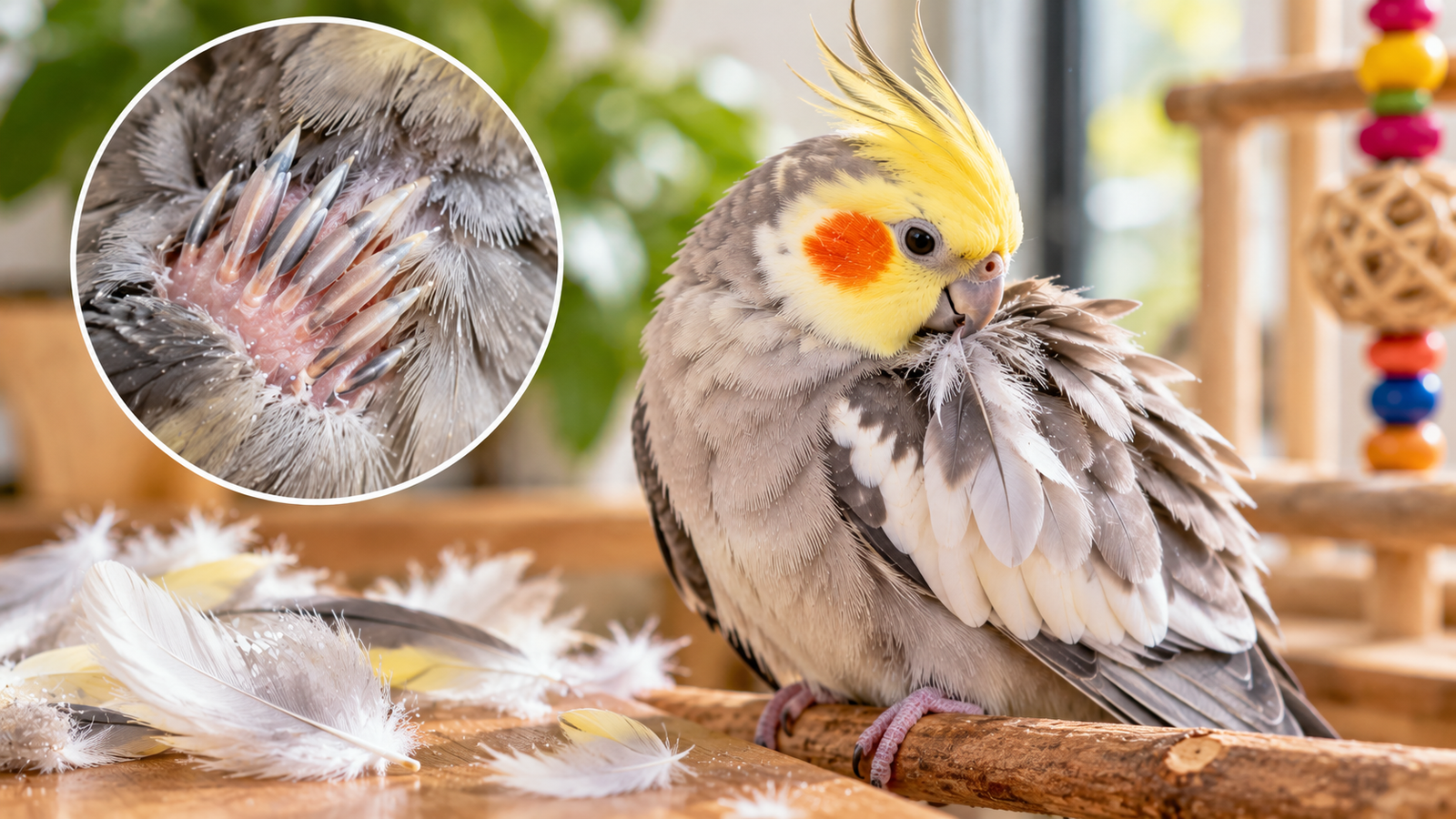
A pin feather is a newly developing feather emerging from a feather follicle.
At first, the developing feather is covered by a protective keratin sheath.
This gives it a narrow, pointed appearance that can resemble:
- A small spike
- A pin
- A tiny plastic-covered feather
As the feather matures, the outer sheath becomes dry and begins flaking away.
Why Do Pin Feathers Look White?
The light-colored material surrounding many pin feathers is the keratin sheath.
As the feather develops, the bird gradually removes this covering through preening.
Small flakes may fall onto:
- The bird’s feathers
- Your clothing
- Perches
- The cage floor
This dry material can be completely normal during a molt.
What Is a Blood Feather?
A newly growing feather needs nutrients to develop.
During this stage, it has an active blood supply inside the shaft.
This developing feather is often called a blood feather.
As the feather matures, blood gradually recedes from the shaft until the mature feather no longer has the same active blood supply.
Are Pin Feathers and Blood Feathers the Same Thing?
The terms are often used together because newly developing feathers initially contain blood.
The important practical point is that a newly growing feather may still contain living tissue and can be sensitive.
Therefore, never assume that every visible pin feather is ready to be handled.
What Does a Growing Blood Feather Look Like?
Depending on the bird and feather, the base of a developing feather may appear:
- Dark
- Blue-gray
- Pink
- Red beneath the sheath
This is especially important with larger wing and tail feathers.
Do not intentionally bend, cut or break a developing blood feather.
Can Pin Feathers Hurt?
Yes. Newly growing feathers can be sensitive.
Some molting birds become less tolerant of:
- Head scratching
- Touching
- Handling
- Grooming
A bird that normally loves having its head scratched may temporarily object when many sensitive new feathers are developing.
Respect the bird’s response rather than forcing contact.
Can You Help a Bird With Pin Feathers?
Sometimes, but only carefully.
Birds can preen most areas of their own bodies.
However, areas such as the:
- Top of the head
- Back of the head
- Upper neck
are difficult for a bird to reach.
In a flock, another bird may help preen these areas.
A companion bird may sometimes invite a trusted person to help instead.
How to Help With Mature Pin Feather Sheaths
Only help when your bird clearly enjoys it.
A sheath that is ready to come away is generally:
- Dry
- Flaky
- Loose near the tip
You can very gently roll the dry tip between your fingertips.
The old sheath may crumble away and release the mature portion of the feather.
How Do You Know a Pin Feather Is Not Ready?
Stop immediately if:
- The bird pulls away
- The bird vocalizes in discomfort
- The feather feels soft or tender
- The sheath does not flake easily
- The base appears dark or blood-filled
You do not need to remove every sheath yourself.
Most birds are perfectly capable of managing their own feathers as they mature.
Never Pull Out a Normal Pin Feather
Do not pull a growing feather simply because it looks uncomfortable or untidy.
Removing a healthy developing feather can:
- Cause pain
- Cause bleeding
- Damage the follicle
- Delay normal feather development
What if a Blood Feather Breaks?
A damaged blood feather may bleed significantly.
If fresh blood continues dripping, the situation should be treated promptly.
Current veterinary guidance advises against routinely pulling a damaged blood feather at home because removal itself may cause additional bleeding, pain or follicle damage.
Apply appropriate first aid and contact an avian veterinarian if bleeding continues.
For detailed emergency instructions, read: Bird First Aid Basics: What Every Owner Should Know .
Does a Molting Bird Need Extra Food?
Growing new feathers requires energy and nutrients.
Feathers are largely made from keratin, a specialized protein.
However, this does not mean owners should automatically give large amounts of protein, vitamin powders or supplements during every molt.
Focus on Complete, Balanced Nutrition
The safest approach is to make sure the bird already receives a nutritionally appropriate diet for its species.
Depending on species, this may include:
- A nutritionally complete formulated diet
- Appropriate vegetables
- Species-appropriate fresh foods
- Other foods recommended for that bird
A bird living mainly on an imbalanced seed or table-food diet may lack nutrients needed for healthy feather production.
Nutrition and Feather Quality
Poor nutrition can contribute to:
- Abnormal feather growth
- Poor feather strength
- Abnormal coloration
- Delayed or irregular molt
- Skin and feather problems
If your bird’s feathers repeatedly grow abnormally, the diet should be reviewed with an avian veterinarian.
Budgie Molting
Budgies naturally replace their feathers throughout life.
During a noticeable budgie molt, you may see:
- Small body feathers around the cage
- Pin feathers around the head
- More preening
- A slightly untidy appearance
- Temporary sensitivity around the head
A healthy budgie should continue eating, perching and behaving reasonably normally.
Do Budgies Get Bald When They Molt?
A normal budgie molt should not usually leave large bald areas.
A few temporarily thin-looking spots around developing feathers can look different from the normal plumage, but obvious exposed skin deserves closer attention.
What Is French Molt in Budgies?
Despite the name, French molt is not simply a normal heavy molt.
The term is commonly associated with feather abnormalities in young budgies, including loss or poor development of important flight and tail feathers.
Avian polyomavirus can be involved in this condition.
A young budgie with unusual loss of wing or tail feathers, abnormal feather development or difficulty flying should be evaluated by an avian veterinarian.
Cockatiel Molting
Cockatiels also go through normal periods of feather replacement.
Owners often notice:
- Many small gray or colored feathers
- New head and crest pin feathers
- More feather dust
- Frequent preening
- Greater sensitivity around new feathers
Because cockatiels produce powder down, feather dust can remain noticeable even outside a heavy molt.
Why Is My Cockatiel Grumpy During a Molt?
Some cockatiels become temporarily less tolerant of touching while many new feathers are growing.
This may happen because developing feathers can be sensitive.
Give the bird more choice about physical contact and avoid rubbing over tender pin feathers.
Parrot Molting
Larger parrots also replace worn feathers, but timing and intensity differ between species and individuals.
During a normal molt, you might notice:
- Body feathers being replaced
- Gradual replacement of wing feathers
- New tail feathers
- Pin feathers around the head
- Increased preening
Larger wing and tail blood feathers should be protected carefully while growing because trauma to these developing feathers can cause significant bleeding.
Canaries and Finches During Molt
Small songbirds also molt.
A canary may become quieter and may sing less during a substantial molt.
Some reduction in activity can occur, but severe weakness, prolonged fluffing or failure to eat should not simply be blamed on molting.
Can a Bird Be Tired During a Molt?
A heavy molt requires substantial feather production.
Some birds may therefore seem:
- Quieter
- Less active
- More interested in resting
- Less interested in social interaction
A mild change can occur during a heavy molt.
However, molting should not be used to explain severe lethargy or illness.
When “Molting Tiredness” Is Not Normal
Contact an avian veterinarian if your bird:
- Sits on the cage floor
- Cannot perch normally
- Stops eating
- Loses weight
- Sleeps almost constantly
- Has labored breathing
- Develops abnormal droppings
- Appears severely weak
For a fuller symptom guide, read: Signs of Illness in Pet Birds .
Does a Molting Bird Need More Sleep?
A bird undergoing a heavy molt may benefit from plenty of uninterrupted rest.
Keep the bird’s normal day-night routine consistent rather than extending artificial light late into the evening.
A predictable sleep schedule also helps maintain healthy biological rhythms.
For species-specific sleep guidance, read: How Much Sleep Do Pet Birds Need? .
Bathing During a Molt
Many birds enjoy bathing or misting while molting.
Water can:
- Support normal feather care
- Encourage preening
- Moisten dry skin and feathers
- Help soften mature feather sheaths
Let your bird choose whether it wants to bathe.
For complete guidance, read: How Often Should You Bathe a Pet Bird? .
Do Not Put Products on Pin Feathers
Routine molting does not require:
- Oil
- Skin cream
- Human moisturizer
- Essential oils
- Anti-itch cream
- Pet shampoo
Birds preen their feathers with their beaks and may swallow anything applied to the plumage.
Use clean water for routine bathing unless an avian veterinarian has prescribed something else.
Is Increased Preening Normal During a Molt?
Yes.
Preening helps birds:
- Align feathers
- Remove debris
- Maintain plumage
- Remove dried keratin sheaths from developing feathers
Therefore, you may notice substantially more grooming during a molt.
Normal Preening vs Feather Plucking
Preening and feather destructive behavior are not the same thing.
During normal preening, the bird carefully works through its feathers without intentionally destroying them.
Feather destructive behavior may involve:
- Chewing feathers
- Shredding feather edges
- Breaking shafts
- Pulling feathers out
- Damaging the skin
How to Tell Molting From Feather Plucking
| Normal Molt | Possible Feather Destructive Behavior |
|---|---|
| Loose feathers are generally intact | Feathers may be chewed or shredded |
| New feathers replace lost feathers | Repeated damage may prevent normal plumage |
| Loss occurs gradually | Specific reachable areas may become damaged |
| No skin trauma | Skin may become irritated or injured |
| Normal preening | Persistent chewing or pulling |
Why Do Birds Pluck Feathers?
Feather destructive behavior can have many possible causes.
These include:
- Skin disease
- Infection
- Poor nutrition
- Pain
- Environmental stress
- Boredom
- Reproductive or hormonal behavior
- Other underlying medical problems
Because the causes are varied, do not assume a bird is plucking simply because it is bored.
Medical causes should be investigated first.
Do Mites Cause Molting or Feather Loss?
Parasites can cause feather and skin problems, but mites are not the most common explanation for every bird that scratches or loses feathers.
Merck notes that feather mites are relatively uncommon in many pet parrots.
Do not automatically treat a molting bird with:
- Mite spray
- Insecticide powder
- Dog flea products
- Cat flea products
- Home pesticide mixtures
Parasites should be diagnosed and treated appropriately.
What Are Abnormal Pin Feathers?
A healthy developing feather should mature and open normally.
Seek veterinary advice if new feathers repeatedly appear:
- Deformed
- Pinched
- Club-shaped
- Abnormally colored
- Fragile
- Bleeding without clear trauma
- Unable to emerge normally
What Is Psittacine Beak and Feather Disease?
Psittacine beak and feather disease, often shortened to PBFD, is a viral disease caused by circovirus.
It primarily affects parrots and is especially important in younger birds.
Possible feather-related signs can include:
- Abnormal pin feathers
- Malformed mature feathers
- Feathers falling out easily
- Abnormal regrowth
- Loss of feathers in areas the bird cannot easily pluck itself
- Changes in normal feather coloration
Bald Patches During Molting
Normal molting should not generally create large areas of completely exposed skin.
A true bald patch can have several causes, including:
- Feather destructive behavior
- Barbering by another bird
- Skin infection
- Follicle disease
- Trauma
- Abnormal feather development
- Other medical conditions
A persistent or enlarging bald patch should be examined by an avian veterinarian.
What Is Barbering?
Barbering occurs when one bird damages the feathers of another.
This may happen between cage mates.
Affected feathers can appear:
- Chewed
- Shortened
- Ragged
- Broken
If two birds live together, observe whether one is repeatedly chewing the other’s feathers.
Feather Cysts Are Not Normal Molting
A feather cyst occurs when a growing feather fails to emerge normally from the follicle and instead continues developing beneath the skin.
It may create:
- A lump
- A swelling
- A visible mass beneath the skin
Feather cysts require veterinary assessment and may need surgical treatment.
Can Stress Affect Molting?
Stress can affect many aspects of a bird’s health and behavior.
Factors that may influence feather condition or normal biological rhythms include:
- Disrupted sleep
- Unpredictable lighting
- Poor nutrition
- Environmental stress
- Underlying illness
- Reproductive activity
Aim for a stable daily routine rather than trying to manipulate a molt artificially.
Should You Change the Light Schedule During Molt?
Do not make sudden dramatic changes simply to try to end or start a molt.
Instead, provide a consistent day-night schedule appropriate for the species.
If your bird seems to molt almost continuously or has unusually irregular feather cycles, discuss lighting, reproductive behavior and health with an avian veterinarian.
Can Molting Affect a Bird’s Personality?
Temporarily, yes.
Some birds become:
- Quieter
- Less playful
- More sensitive to touch
- Less tolerant of handling
Others behave almost exactly the same as usual.
Do not assume every bite, scream or behavior change is caused by molting, particularly when the change is severe or persistent.
How to Make a Molting Bird More Comfortable
Good supportive care is simple.
Provide:
- A nutritionally appropriate diet
- Fresh clean water
- Regular bathing opportunities
- A predictable sleep routine
- A clean cage
- Comfortable perches
- Normal enrichment
- Gentle handling
Allow extra rest when the bird wants it.
Keep Normal Enrichment Available
Molting does not mean your bird should spend weeks doing nothing.
Continue offering:
- Foraging activities
- Safe chewing toys
- Training
- Social interaction
- Appropriate out-of-cage exercise
Adjust intensity if your bird seems temporarily less energetic.
Handle Sensitive Birds Gently
During a heavy molt, avoid repeatedly rubbing across areas filled with new pin feathers.
Let your bird initiate head scratches when possible.
If it moves away or signals discomfort, respect that choice.
Monitor Body Weight During a Heavy Molt
A normal molt should not cause substantial unexplained weight loss.
Regular weight monitoring can help you detect a problem that feathers might otherwise hide.
Contact your veterinarian if weight falls consistently or appetite decreases.
Do Molting Birds Need Supplements?
Not automatically.
A balanced diet should already provide the nutrients required for normal feather production.
Adding concentrated:
- Vitamin products
- Minerals
- Amino acids
- Protein powders
without a specific reason can unbalance the diet.
Use supplements only when an avian veterinarian recommends them for your individual bird.
Does Molting Cause Itching?
Growing pin feathers and dry feather sheaths can make some birds seem more interested in preening.
However, intense persistent itching is different.
Seek veterinary advice if scratching is accompanied by:
- Skin sores
- Crusts
- Bleeding
- Bald patches
- Feather chewing
- Abnormal skin
Should You Remove Loose Feathers?
If a feather has naturally detached and is lying in the cage, simply remove it during normal cleaning.
Do not pull a feather that is still attached simply because it appears loose.
Allow natural shedding unless your avian veterinarian identifies a medical reason to intervene.
Why Are There So Many Tiny Feathers in the Cage?
Not every feather is a large flight or tail feather.
Birds have many:
- Contour feathers
- Down feathers
- Small body feathers
A molt may therefore produce a surprising amount of small feather material without causing visible baldness.
Why Do Molted Feathers Look Different?
The feathers you find may vary greatly in:
- Size
- Shape
- Color
- Texture
That is normal because different feather types perform different jobs.
What matters is that naturally molted feathers are generally intact rather than repeatedly chewed into damaged pieces.
Can a Bird Lose Flight Feathers During Molt?
Yes.
Flight feathers are eventually replaced like other feathers.
Normal replacement usually occurs in an organized sequence rather than losing all important flight feathers at once.
A sudden major loss of flight ability, especially in a young bird or alongside abnormal feathers, deserves veterinary assessment.
Can Tail Feathers Fall Out During a Normal Molt?
Yes.
Tail feathers are also replaced.
You may occasionally find a long tail feather on the cage floor during a molt.
New tail feathers will begin developing from the follicles.
Be Careful Around Growing Wing and Tail Feathers
Large developing feathers can contain a substantial blood supply.
Make sure the cage and play area are free from objects that could catch or break them.
Check for:
- Sharp cage hardware
- Tight spaces
- Damaged toys
- Frayed rope
For broader cage safety, read: How to Set Up a Bird Cage: Size, Perches, Toys & Placement .
When Should You See an Avian Veterinarian?
Arrange veterinary assessment if your bird develops:
- Large bald areas
- Sudden extensive feather loss
- Repeatedly malformed feathers
- Abnormal pin feathers
- Feather bleeding
- Persistent feather chewing or plucking
- Skin sores or crusting
- Unexplained severe itching
- Failure of feathers to regrow
- A molt that appears unusually prolonged or abnormal
- Unexplained weight loss
- Reduced appetite
- Marked lethargy
- Other signs of illness
Bird Molting Checklist
During a molt, regularly check:
- Is my bird still eating normally?
- Is body weight stable?
- Are new feathers appearing?
- Do the new feathers look healthy?
- Are shed feathers intact rather than chewed?
- Are there any true bald patches?
- Is the skin free from sores?
- Is the bird still able to perch and move normally?
- Is there any active bleeding?
- Is the molt progressing rather than continuously worsening?
Common Bird Molting Mistakes
- Assuming every feather loss is normal molting
- Assuming every loose feather means disease
- Pulling developing pin feathers
- Breaking dry sheaths too close to the sensitive base
- Ignoring bleeding blood feathers
- Forcing head scratches when pin feathers are tender
- Giving unnecessary vitamin or protein supplements
- Trying random mite treatments for normal molt
- Applying oil or cream to feathers
- Ignoring large bald patches
- Calling feather plucking a molt
- Ignoring weight loss because the bird is molting
- Assuming severe lethargy is normal during molt
- Ignoring abnormal pin feathers
- Assuming French molt in young budgies is an ordinary molt
Frequently Asked Questions
What is bird molting?
Molting is the natural process of shedding old feathers and replacing them with newly grown feathers.
How do I know if my bird is molting?
Common signs include intact loose feathers around the cage, new pin feathers, increased preening and gradual feather replacement without major bald patches.
How often do pet birds molt?
It depends on species and environment. Many birds have a major molt approximately once a year and may have smaller periods of feather replacement, but indoor birds can have less predictable patterns.
How long does bird molting last?
Molting can last several weeks and sometimes longer. Captive birds with irregular artificial light cycles may have especially prolonged or irregular molts.
What are pin feathers?
Pin feathers are newly developing feathers surrounded by a protective keratin sheath. As they mature, the dry sheath flakes away and the new feather opens.
What is a blood feather?
A blood feather is a developing feather that still contains an active blood supply. It can bleed significantly if it is broken or cut.
Can I touch my bird’s pin feathers?
Only gently and when your bird welcomes it. Mature dry sheath at the feather tip may crumble easily, but a newer pin feather can be sensitive. Never squeeze or manipulate the blood-filled base.
Should I remove pin feather sheaths?
Usually you do not need to. Birds remove most sheaths themselves through preening. You may gently help with dry mature sheaths around the head when your bird clearly enjoys it.
Why is my bird cranky while molting?
New feathers can be sensitive, and heavy feather production may temporarily change activity or tolerance for handling. Respect the bird’s preference for less touching during this period.
Do birds get tired during molting?
Some birds become quieter during a substantial molt. Severe weakness, loss of appetite or sitting on the cage floor is not something to dismiss as ordinary molting.
Should a molting bird have bald patches?
Large bald areas are not typical of a normal gradual molt. Persistent exposed skin should be evaluated for feather destructive behavior, skin disease, infection or other causes.
Is it normal for my bird to lose tail feathers?
Yes. Tail feathers are periodically replaced during normal molting. However, repeated abnormal loss, poor regrowth or sudden loss of many tail and flight feathers warrants veterinary attention.
Is it normal for my bird to lose wing feathers?
Yes. Flight feathers are replaced during molt, usually in a coordinated sequence. Sudden major flight-feather loss or abnormal regrowth should be investigated.
Should I give my molting bird extra protein?
A bird needs good nutrition to produce feathers, but extra protein supplements are not automatically necessary. Feed a complete species-appropriate diet and ask an avian veterinarian before adding concentrated supplements.
Should I give vitamins during molting?
Not routinely if your bird already eats a nutritionally balanced diet. Unnecessary supplementation can create nutritional imbalances.
Does bathing help a molting bird?
Many birds enjoy bathing or misting during molt. Water supports normal preening and can help soften dry mature feather sheaths.
Why are there white flakes around my molting bird?
They may be dried keratin from the protective sheaths surrounding developing feathers. These sheaths naturally crumble as new feathers mature.
How can I tell molting from feather plucking?
Naturally molted feathers are generally intact. Feather destructive behavior often produces chewed, shredded or repeatedly damaged feathers and may create unusual bald areas.
Do mites cause feather loss in birds?
Parasites can cause feather problems, but mites are not the most common cause of feather loss in many companion parrots. Have suspected parasites properly diagnosed rather than using over-the-counter pesticides automatically.
What is French molt in budgies?
French molt refers to abnormal feather development or loss, especially involving the flight and tail feathers of young budgies. It is not a normal heavy molt and can be associated with avian polyomavirus.
What is PBFD?
Psittacine beak and feather disease is a viral disease of parrots that can cause abnormal feather growth and feather loss. Diagnosis requires veterinary testing rather than appearance alone.
When should I worry about my bird molting?
Contact an avian veterinarian when feather loss causes large bald areas, feathers grow abnormally, bleeding occurs, the bird plucks or chews feathers, weight drops, appetite changes or other signs of illness develop.
The Bottom Line
Molting is a normal and essential part of a bird’s life.
Old feathers are gradually shed and replaced by new feathers growing from the follicles. During this process, you may notice loose feathers, increased preening, dry keratin flakes and clusters of developing pin feathers.
New feathers initially contain a blood supply and can be sensitive. Do not pull them, squeeze their bases or force grooming. If your bird enjoys help with head pin feathers, restrict yourself to gently crumbling the dry mature sheath near the tip.
Support your bird with a nutritionally appropriate diet, clean water, normal enrichment, regular opportunities to bathe and a consistent sleep routine. Avoid unnecessary vitamin or protein supplements unless an avian veterinarian recommends them.
Most importantly, learn the difference between normal molting and abnormal feather loss. Normal molt is gradual and should produce healthy replacement feathers. Large bald areas, chewed feathers, malformed pin feathers, repeated bleeding, failure to regrow feathers or signs of illness are not something to dismiss as an ordinary molt.
When you are uncertain, an avian veterinarian can examine the feathers, skin, diet and overall health to determine whether the changes are normal or require treatment.
References and Further Reading
Merck Veterinary Manual — Skin and Feather Disorders of Pet Birds
Normal feather loss and molting, feather destructive behavior, parasites, feather cysts, PBFD and abnormal feather growth.
Merck Veterinary Manual: Skin and Feather Disorders of Pet Birds
Merck Veterinary Manual — Viral Diseases of Pet Birds
Avian polyomavirus, French molt in budgerigars and psittacine beak and feather disease.
Merck Veterinary Manual: Viral Diseases of Pet Birds
VCA Animal Hospitals — Molting in Birds
Feather growth, normal molting, seasonal influences, captive light cycles and nutritional demands during molt.
VCA Animal Hospitals: Molting in Birds
VCA Animal Hospitals — Blood Feathers in Birds
Pin feather development, blood supply, feather sheaths, normal preening and emergency care for damaged blood feathers.
VCA Animal Hospitals: Blood Feathers in Birds
Association of Avian Veterinarians — Preening and Allopreening
Normal avian grooming behavior and the role of preening in feather maintenance.