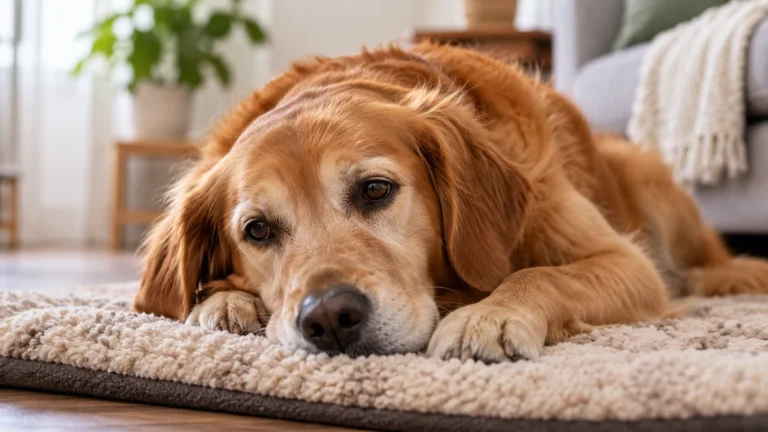
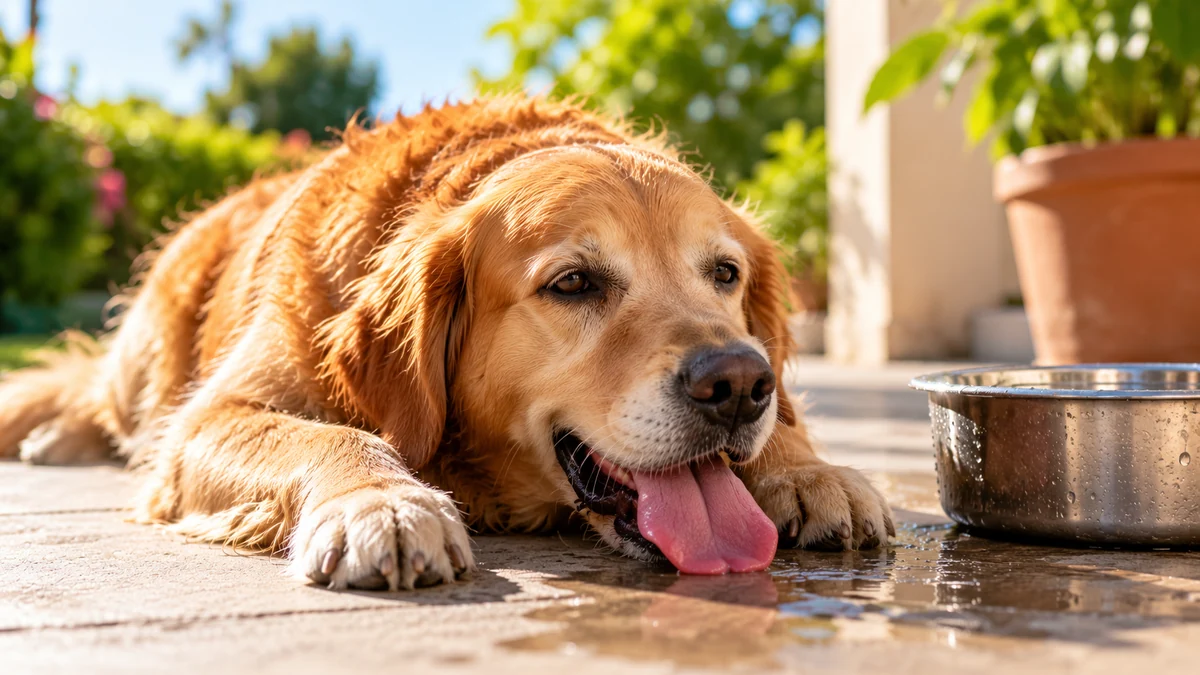

Heatstroke happens when a dog’s body heats up faster than it can cool itself down. Dogs barely sweat. They lose heat mainly by panting, and on a hot day, in a stuffy car or during hard exercise, panting can’t keep up. Body temperature climbs, and above about 104°F (40°C) the heat starts to damage organs. It can become life-threatening within minutes, which is why the first few minutes of cooling matter so much.
In short: Heavy panting, drooling, weakness, vomiting and very red or pale gums in a hot dog are warning signs. Move the dog somewhere cool, pour cool tap water over its body, get air moving over it, and call a vet straight away, even if it seems to recover. Most cases are preventable: walk early or late, skip exercise on hot days, and never leave a dog in a parked car.
Urgent: heatstroke is an emergency. Start cooling your dog right away, then get it to a vet. Organ damage can show up hours later, so a dog that seems back to normal still needs to be checked.
Signs of heatstroke in dogs
The signs tend to build as the dog gets hotter. Catching them early makes a big difference.
| Stage | What you may see |
|---|---|
| Early | Heavy, fast panting; struggling to breathe; tiredness; looking for shade or a cool floor |
| Getting worse | Thick drooling or foaming, vomiting, diarrhea, gums that look very red or pale, trembling, wobbliness, weakness |
| Severe | Confusion, collapse, seizures, blood in vomit or diarrhea, unconsciousness |
Some dogs also seem restless or anxious and keep moving about, unable to settle. A healthy dog’s normal temperature is roughly 100.4–102.2°F (38–39°C). Your vet will measure it, but you don’t need a thermometer to act. If your dog is hot and showing these signs, start cooling.
First aid: what to do right now
- Get out of the heat. Move your dog into shade, an air-conditioned room or the coolest spot you can find.
- Cool with water. Pour cool tap water gradually over the whole body, especially the belly, neck and between the back legs. Keep water away from the nose and mouth. A garden hose, shower or buckets all work. A dog that is used to water can stand in a cool bath with its head held well clear.
- Move the air. Fans, an open car window or air conditioning help the water evaporate, which carries heat away.
- Offer water, don’t force it. Let your dog drink small amounts if it wants to.
- Call the vet while you cool. Tell them you are on your way. Keep cooling on the way there, with the air conditioning on or windows open.
Common first aid mistakes
Don’t drape a wet towel over the dog and leave it there. It soon warms up and traps heat against the body. Lying the dog on a cool, wet towel is fine. Don’t cuddle a hot dog close to you either. And don’t wait to see whether your dog perks up before calling the vet. PDSA notes that the faster a dog is cooled and treated, the better its chances of a full recovery. Delays make severe outcomes much more likely.
For the wider first aid picture, including what to keep at home, see our dog first aid basics and pet first aid kit checklist.
What happens at the vet
The vet will keep cooling your dog in a controlled way and check its temperature often, so it doesn’t overshoot and get too cold. Depending on how sick the dog is, treatment may include oxygen, fluids into a vein and blood tests to look for damage to the kidneys, liver, gut or blood clotting. Mild cases that are treated quickly usually recover well. Dogs with severe heatstroke may need several days in hospital, and PDSA advises close monitoring for a day or two after they come home.
Which dogs are most at risk
Any dog can overheat, but some struggle far more than others:
- Flat-faced breeds such as Pugs, French Bulldogs, English Bulldogs, Boston Terriers and Shih Tzus. Their airways make panting less effective. PDSA reports that English Bulldogs are about 14 times more likely to get heatstroke than Labradors.
- Overweight dogs, as extra fat holds in heat. Our guide on how to tell if your dog is overweight can help you check.
- Giant breeds and thick-coated or long-haired dogs.
- Very young and very old dogs, and dogs with heart or breathing problems.
- Very active dogs that keep running and playing when they should stop. PDSA notes that most cases happen during exercise or play, not just from hot weather.
How to prevent heatstroke
Never leave a dog in a parked car on a warm day, not even for a few minutes, in the shade or with the windows cracked. The AVMA warns that cars can reach deadly temperatures quickly, even when the weather doesn’t feel extreme. If you have to drive in the heat, keep the car cool, the dog shaded and water on hand. Our guide to traveling by car with a dog has more on this.
Walk at the coolest times. Early morning and late evening are best. On very hot days, swap the walk for a short sniff in the shade and some calm brain games indoors, such as our indoor scent games.
Check the ground. Asphalt, sand and artificial grass get hot enough to burn paws. Press the back of your hand to the surface. If you can’t comfortably hold it there for about seven seconds, it is too hot for your dog.
Provide shade and water at home. Dogs spending time outdoors need real shade that moves with the sun, plenty of fresh water and a cool place to lie. Indoors, a fan, tiled floor or cooling mat helps.
Know your dog’s limits. Stop play before your dog is panting hard, and don’t rely on it to stop by itself. Ball-mad dogs especially will keep going long past the point they should rest.
Frequently asked questions
How quickly can a dog get heatstroke?
It can happen very fast, within minutes in a hot car or during hard exercise on a warm day. That is why dogs should never be left in parked cars and why exercise on hot days should be cut short or skipped.
Should I use ice-cold water to cool my dog?
Cool tap water poured steadily over the body, with air moving over the dog, is the approach PDSA recommends. Ice packs wrapped in a towel can be placed between the back legs. The key is to start cooling straight away with whatever cool water you have, then get to a vet.
Can a dog recover from heatstroke?
Yes, many do, especially when they are cooled quickly and treated early. Severe cases or delayed treatment can cause lasting organ damage or be fatal, so every suspected case needs a vet, even if the dog seems better.
Is panting always a sign of overheating?
No. Dogs pant after exercise, when excited and when warm. Panting is a concern when it is very heavy, doesn’t settle with rest and shade, or comes with drooling, weakness, vomiting or a change in gum color. Panting while at rest in a cool room can also signal pain or illness and is worth a vet check. See signs your dog is sick.