
Tortoises have a reputation for eating lettuce and strawberries, and plenty of pet tortoises are still fed that way. Unfortunately, it’s one of the most common reasons they end up with shell and health problems. What a tortoise should eat depends heavily on where its species comes from, and most pet tortoises need a diet that looks far more like a meadow than a fruit bowl.
Here’s what to feed a pet tortoise, how the needs of different species compare, and the mistakes worth avoiding.
At a glance: most pet tortoises, including Mediterranean species, are grazers that should eat mainly weeds, flowers, leaves and, for some, grasses and hay. Only certain tropical species, such as red-footed tortoises, eat fruit and small amounts of animal protein. Add calcium, provide UVB lighting, keep fresh water available at all times and never feed dog food, cat food or other high-protein foods to grazing species.
Start with your tortoise’s species
Tortoises from dry, scrubby or grassland habitats eat very differently from those living in humid forests. If you aren’t sure which species you have, find out before planning a diet. A reptile vet or a tortoise rescue group can help identify it.
| Type | Examples | Main diet | Fruit and protein |
|---|---|---|---|
| Mediterranean grazers | Hermann’s, spur-thighed (Greek), marginated, Horsfield’s (Russian) | Broad-leaved weeds, flowers and leaves | Avoid fruit and animal protein |
| Grassland grazers | Sulcata (African spurred), leopard | Mostly grasses and hay, plus weeds and flowers | Avoid fruit and animal protein |
| Tropical forest species | Red-footed, yellow-footed | Leafy greens, flowers and plants | Some fruit and small amounts of animal protein |
Feeding Mediterranean and grassland tortoises
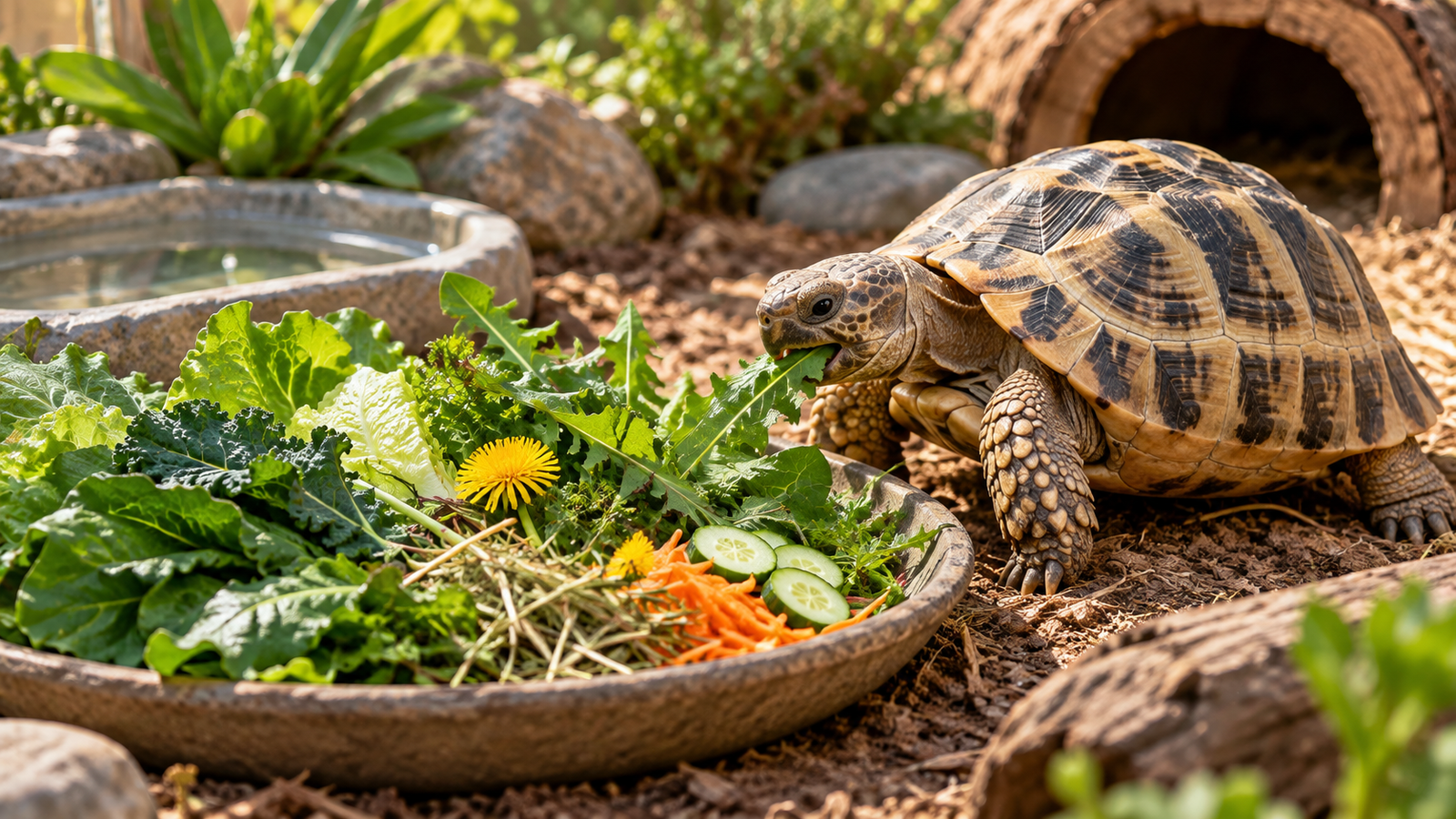
These tortoises have digestive systems built for tough, fibrous, low-sugar plants. In the wild they eat a huge variety of them, and variety matters in captivity too.
Good everyday foods for Mediterranean species include common garden weeds such as:
- Dandelion (leaves and flowers)
- Clover
- Plantain (the weed, not the banana-like fruit)
- Chickweed
- Sow thistle
- White dead-nettle
Only pick plants you’re sure are safe and that haven’t been sprayed with weedkillers, pesticides or lawn treatments. Avoid roadsides. Some owners grow a patch of tortoise-safe weeds or buy seed mixes designed for tortoises, which makes year-round supply easier.
Sulcata and leopard tortoises need grasses and hay as the bulk of their diet, with weeds and flowers on top. These large species do best with daily access to grazing and good-quality hay.
If you have to use store-bought greens
Weeds are best, but there will be times, especially in winter, when you need to rely on greens from a store. Mixed salad leaves with a good variety of dark greens can fill the gap. Lettuce on its own has little nutritional value and fiber, so it shouldn’t be a staple. Some greens are best fed only occasionally: spinach is high in oxalates, which bind calcium, and cabbage and related greens contain compounds that can affect the thyroid if fed in large amounts. Rotating foods is the simplest way to avoid overdoing any one of them.
Feeding tropical species
Red-footed and yellow-footed tortoises come from forests and have a more varied natural diet. Alongside leafy greens, flowers and plants, they can have some fruit and occasional animal protein, such as earthworms or other suitable invertebrates. Leafy plants should still make up most of the diet, and fruit and protein should be kept to modest amounts.
Because these species are often lumped in with other tortoises, it’s worth checking a species-specific care guide or asking a reptile vet about the right balance for yours.
Foods to avoid
- Dog food, cat food and meat for any grazing species. Too much protein is linked to abnormally fast growth, shell deformities, bladder stones and kidney damage.
- High-protein vegetables such as peas and beans.
- Fruit for Mediterranean and grassland tortoises. Their gut isn’t built to handle sugary food, and it can cause digestive upsets.
- Bread, cereals, dairy and processed human food.
- Plants you can’t identify or that may have been treated with chemicals.
Calcium and UVB lighting
Tortoises need plenty of calcium to build and maintain their shell and bones. Most keepers dust food with a calcium supplement and leave a piece of cuttlefish bone in the enclosure for the tortoise to nibble, which also helps keep the beak worn down. How often to add calcium and whether to use a vitamin and mineral supplement as well depends on your tortoise’s age, species and setup, so ask your reptile vet for a routine that suits yours.
Calcium alone isn’t enough. Tortoises need UVB light to make vitamin D3, which lets them absorb and use calcium. Natural sunshine is ideal, but window glass blocks UVB, and many climates don’t provide enough outdoor sun for much of the year. Tortoises kept indoors need a suitable UVB lamp, replaced as often as the manufacturer recommends because output drops over time. Our guide on setting up a safe home for a pet tortoise covers lighting, heat and enclosure layout in more detail.
Important: a shell that feels soft or bends slightly under gentle pressure, swollen limbs or a misshapen jaw can be signs of metabolic bone disease, often caused by too little calcium or UVB. See a reptile vet promptly.
Water and bathing
Fresh water should always be available, in a shallow dish your tortoise can walk into and out of easily without risk of drowning. Tortoises often drink while soaking, so many keepers also give their tortoise regular shallow, lukewarm baths. Change the water daily, and straight away if it’s been soiled.
How often to feed
Advice varies a little between sources, but a common pattern is:
- Young tortoises: feed every day.
- Adults: feed daily or every other day, depending on species and size. Some keepers who feed daily skip one day a week.
Offer food in the morning once your tortoise has warmed up under its basking lamp or in the sun, since tortoises need warmth to digest properly. A tortoise that’s growing very fast, looks bulky or has lumpy, raised shell plates may be getting too much food or too much protein. Your vet can check its weight and growth.
A healthy tortoise is usually keen at mealtimes. Loss of appetite outside of any planned hibernation period, weight loss, runny eyes or nose, or changes in droppings are all reasons to book a visit with a reptile vet.
Frequently asked questions
Can tortoises eat fruit?
Only some can. Tropical species such as red-footed and yellow-footed tortoises can have some fruit as part of a varied diet. Mediterranean and grassland species such as Hermann’s, Russian and sulcata tortoises should not be fed fruit.
Can I feed my tortoise lettuce?
Lettuce isn’t toxic, but on its own it has very little nutritional value or fiber. Weeds such as dandelion, clover and plantain, or a varied mix of darker leafy greens, are much better choices.
Is dog or cat food bad for tortoises?
Yes, for grazing species. It is far too high in protein, which is linked to abnormal shell growth, bladder stones and kidney damage. Stick to a plant-based diet suited to your tortoise’s species.
Do tortoises need calcium supplements?
Most do. Many keepers dust food with a calcium supplement and provide cuttlefish bone. Tortoises also need UVB light to use calcium properly. Ask a reptile vet how often to supplement for your tortoise’s age and species.
How often should I feed an adult tortoise?
Adults are commonly fed daily or every other day, depending on species and size. Young tortoises usually need feeding every day. Your vet can help you adjust if your tortoise is growing too fast or gaining too much weight.