
A damp patch on the bath mat, a puddle beside the box, a smell on the laundry pile that wasn’t there last week. A cat peeing outside the litter box is one of the most frustrating problems owners face. It can feel like a protest, but it almost never is. Cats don’t soil the house out of spite. They do it because something hurts, something about the box is wrong for them, or something in their world feels threatening.
Most causes can be fixed if you work through them in order, starting with health.
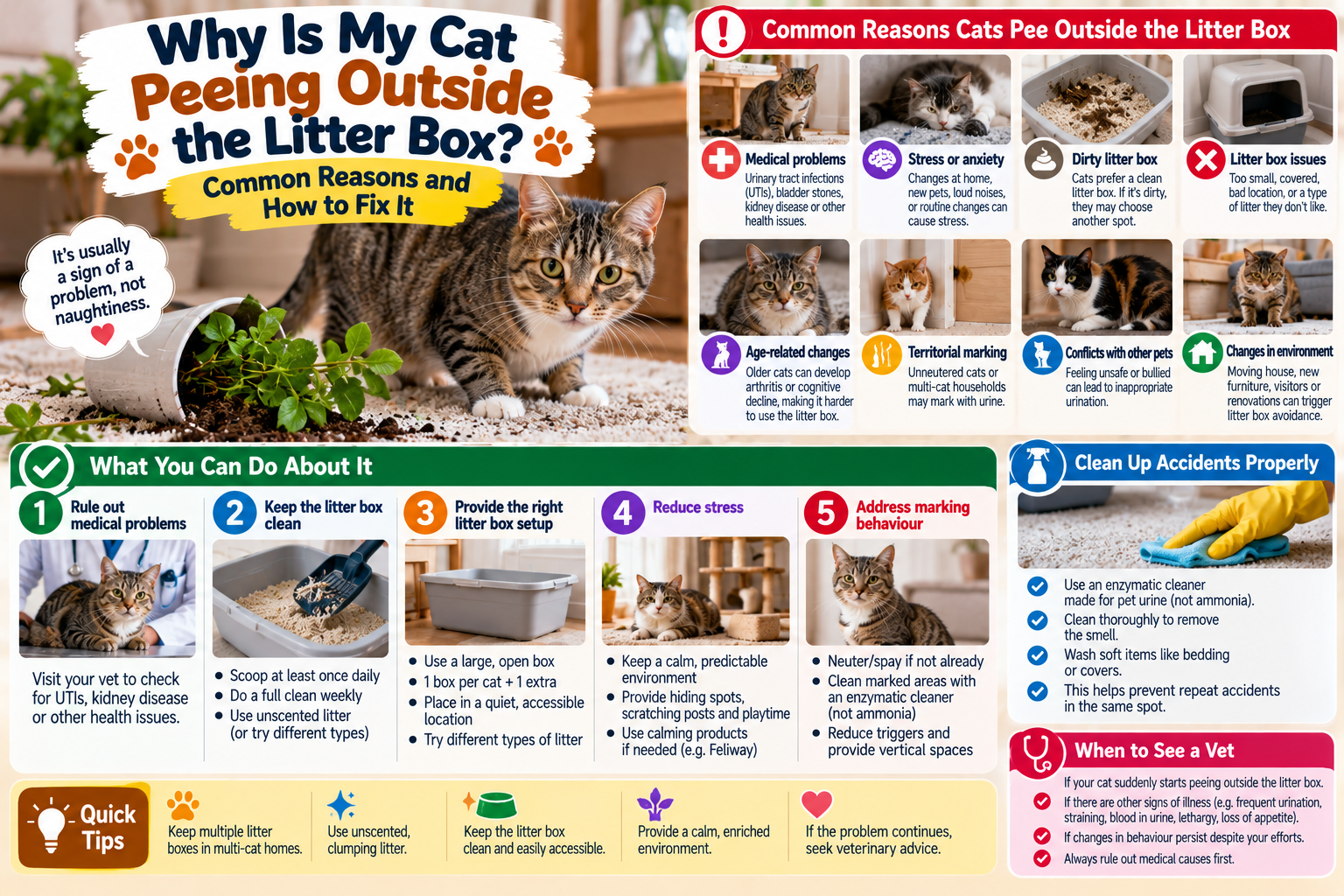
Key points: a cat peeing outside the litter box should see a vet first, because urinary disease, kidney disease, diabetes and arthritis are all common triggers. A cat straining with little or no urine is an emergency. Once health is ruled out, look at box cleanliness, size, litter and location, then at stress and recent changes at home. Spraying on walls is different from peeing on the floor. Use an enzymatic cleaner on accidents, and never punish your cat.
Start with a health check
It’s tempting to go straight to rearranging litter boxes, but medical problems are behind many of these cases, and cats hide discomfort well. A change in toilet habits can be the first sign you get.
Bladder and urinary tract problems
Feline lower urinary tract disease (FLUTD) is an umbrella term for conditions of the bladder and urethra. In cats under about 10, the most common is feline idiopathic cystitis, a bladder inflammation with no single clear cause that seems closely tied to stress. Others include bladder stones, plugs of mineral crystals and mucus-like material, and, less often, infection.
All of these make peeing uncomfortable. A cat with a sore bladder feels an urgent, frequent need to go, passes small amounts, and may start linking the box with pain, then try a soft spot like a rug, bed or towel instead. Watch for repeated trips to the box, crying while peeing, blood-tinged urine and lots of licking around the genitals.
Urgent: if your cat, especially a male, is straining or squatting repeatedly and passing little or no urine, contact a vet or emergency clinic right away. Males have a long, narrow urethra that can become blocked, and a cat that can’t pass urine can die within days, sometimes sooner, without treatment. Don’t wait to see whether it passes.
Illnesses that increase urine
Kidney disease, diabetes and an overactive thyroid all tend to make cats drink and pee more. The box gets wet faster than a tidy cat will tolerate, and the extra urgency means some cats simply don’t make it in time. If you’re scooping bigger or more frequent clumps than usual, tell your vet.
Arthritis and stiff joints
Arthritis is common in older cats and easy to miss. Stepping over a tall box edge or squatting can hurt, and a box up or down the stairs can feel like a long trek. A box with a low entry, placed on the floor where your cat spends most time, often helps while your vet looks at pain relief. Our guide to signs your cat is in pain lists other clues worth watching for.
Your vet will usually examine your cat and test a urine sample, and may add blood tests for older cats.
Is it spraying or peeing?
These are two different behaviors with different fixes, and where the urine lands usually tells you which one you have.
| What you notice | Spraying (marking) | Toileting outside the box |
|---|---|---|
| Posture | Standing, tail upright and often quivering | Squatting |
| Where | Vertical surfaces: walls, doors, curtains, furniture sides | Flat surfaces: floors, rugs, beds, laundry |
| Amount | Small squirts, strong smell | A full puddle |
| Box use | Usually carries on as normal | Often less, or not at all |
Spraying is scent communication, a way to claim territory or cope with feeling unsettled. Unneutered males are the most likely to do it, and neutering or spaying reduces the urge in most cats, though neutered cats of either sex can still mark under stress. Tension with another cat, indoors or seen through a window, is a very common trigger. Because the box isn’t the problem, changing litter won’t stop marking. Reducing the stress will.
When the litter box is the problem
If a healthy cat is squatting on the floor, look at the setup through your cat’s eyes.
- Cleanliness. Many cats refuse a box that already has waste in it. Scoop at least daily, change the litter fully on a regular schedule, and wash the box with mild, unscented soap rather than strong disinfectant.
- Size. Most boxes sold are small. Aim for about 1.5 times your cat’s body length.
- Covers and liners. Some cats like a hood, but others dislike the trapped odor and blocked view, and many dislike plastic liners. Try removing either to see if it helps.
- Litter. Most cats prefer fine, sand-like, unscented litter. A sudden change of brand or texture is a classic trigger, so switch gradually.
- Location. Somewhere quiet and reachable at any hour, away from food and water, noisy appliances and spots where another pet can corner your cat.
Numbers matter too, especially with several cats. Our guide to how many litter boxes cats need covers how many to provide and where to put them.
Where your cat goes instead is a clue. Right next to the box points to the box itself. A soft bed or bath mat can point back to discomfort. A far corner suggests the route or location feels unsafe.
Stress and changes at home
Cats rely on routine and familiar territory, so ordinary events can unsettle them: a house move, a new baby, partner or pet, building work, someone moving out, a strange cat in the yard. Conflict between resident cats is often quiet. One cat may just sit near the box or the hallway to it, and the other stops risking the trip.
Stress has a physical side too, since it’s thought to play a big part in idiopathic cystitis. That’s why vets often pair medical treatment with stress reduction: separate food, water, beds and boxes for each cat, high perches and hiding spots, daily play and predictable routines.
Cleaning up properly
A spot that still smells of urine to your cat invites a repeat visit, and ordinary cleaners only mask the odor for your nose. Blot up as much as you can first, then use an enzymatic cleaner made for pet urine, which breaks down the odor compounds rather than covering them. Leave it for the time on the label. Avoid ammonia-based products, since urine contains ammonia and the smell can draw your cat back. Test on a hidden patch of fabric first.
Why punishment makes it worse
Scolding, rubbing a cat’s nose in the mess or shutting them in with the box teaches nothing useful. Your cat won’t connect the telling-off with the puddle. What they learn is that you’re unpredictable, and that fear adds to the stress that is often driving the problem in the first place.
Litter box and drinking habits often change together when a cat is unwell. Our article on why a cat might not be drinking much water explains what’s normal and when a change is worth a vet visit.
Frequently asked questions
Is my cat peeing outside the litter box out of spite?
No. Cats don’t soil the house to get back at people. It usually means something is wrong, such as pain or illness, a box your cat dislikes, or stress in the home.
Why is my cat peeing on my bed?
Beds are soft, absorbent and smell of you, which can feel safe to a cat that is in pain or anxious. A cat with a sore bladder may also be avoiding a box it links with discomfort. Book a vet check first, then look at the litter box setup and any recent changes at home.
Will neutering stop my cat spraying?
It reduces spraying in most cats by lowering the hormonal drive to mark, and it works best in unneutered males. Neutered cats can still spray when stressed, so it also helps to find the source of tension.
How do I get rid of the smell of cat urine?
Blot up as much as you can, then use an enzymatic cleaner made for pet urine and leave it on for the time the label recommends. Avoid ammonia-based cleaners, because the smell can attract your cat back to the same spot.