
A second bird should not go straight into the resident bird’s cage, even when both look healthy. A new arrival brings two separate questions: whether infection could spread and whether the birds can share space comfortably. Quarantine addresses the first; careful introductions address the second.
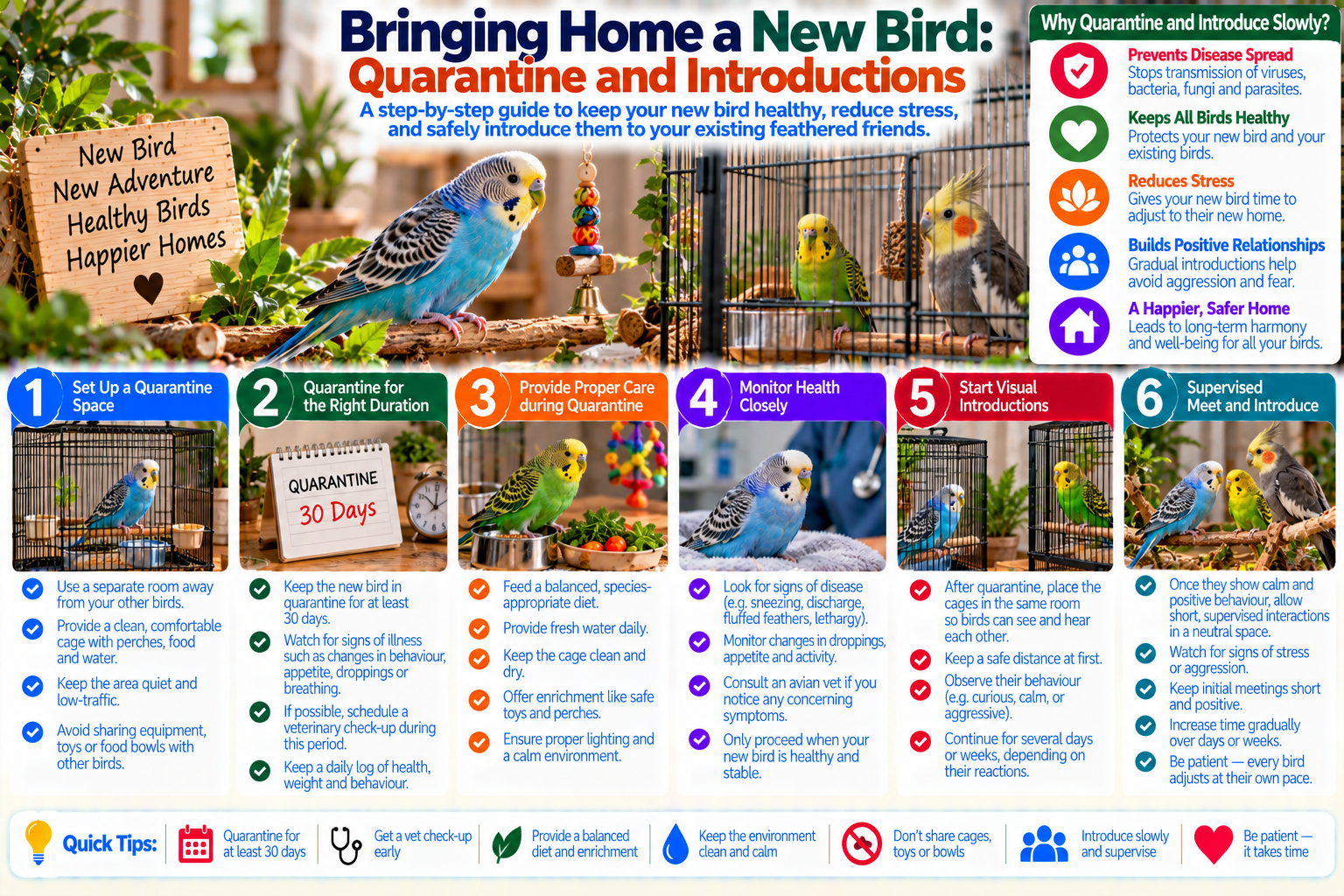
Quick answer: Arrange an avian veterinary assessment and keep the newcomer in a separate room with separate equipment for the quarantine period your vet recommends. Guidance commonly ranges from about 30 to 45 days or around six weeks, but individual risks and test results matter. Start social introductions only after clearance.
Prepare before the bird arrives
Set up a suitable separate cage in a different room, with its own bowls, cleaning tools, and supplies. A second cage beside the resident bird is not meaningful separation for disease control. Discuss ventilation and household limitations with your avian vet if true separation is difficult.
Identify an avian clinic before collecting the bird and ask what initial examination, testing, and records they recommend. Bring information on origin, previous diet, age if known, and contact with other birds. Do not assume a seller’s reassurance replaces an assessment.
Make quarantine a daily care routine
Care for established birds first and the new bird afterward. Wash hands between them and avoid transferring bowls, toys, cleaning cloths, or food scoops. Keep equipment clearly labelled so another household member does not accidentally mix it.
Observe appetite, droppings, breathing, posture, and activity. Record weight if you have been shown how to weigh the bird safely. Quarantine should still provide appropriate enrichment and calm human interaction; it is not a reason to leave the new bird without care.
| Phase | Main purpose | Ready to move on when |
|---|---|---|
| Before arrival | Separate accommodation and veterinary plan | Safe room and supplies are ready |
| Quarantine | Observe health and complete recommended testing | Your avian vet clears the next step |
| Separate cages after clearance | Allow gradual familiarity at a comfortable distance | Both birds remain relaxed |
| Supervised interaction | Assess compatibility in a safe neutral setting | Continued calm behaviour, with separate housing available |
Illness changes the timeline
If symptoms develop, contact the avian vet promptly. Do not simply count down the original end date. Treatment, additional tests, or a revised isolation period may be needed. A bird can hide illness, so normal appearance alone is not a guarantee.
Keep a clear record such as “Tuesday: ate less, droppings changed, clinic contacted.” That helps follow-up and prevents different carers from assuming someone else noticed the problem.
Begin introductions at a distance
After clearance, position separate cages far enough apart that both birds can eat, rest, and move comfortably. Gradually reduce distance only if their behaviour supports it. Prevent toes or beaks being reached through cage bars.
Supervised time outside cages should use a safe, neutral area appropriate for both birds. Provide more than one landing place and a way to separate them calmly. Do not force physical contact or interpret chasing as something they must “work out.” Size and species differences may make direct interaction unsafe.
Keep separate housing as a valid outcome
Some birds enjoy nearby company without sharing a cage. Others remain incompatible. Each bird needs dependable access to food, water, rest, and attention without being displaced.
Do not rush cage sharing: Health clearance does not establish social compatibility. Be prepared to maintain separate accommodation permanently and seek qualified advice if aggression or distress appears.
Read bird illness signs and household hazards for pet birds before setting up the new room.
Frequently asked questions
Is quarantine needed for a healthy-looking bird?
Yes. Some infections may not be obvious on arrival. Your avian vet can tailor the separation and testing plan.
Can the cages stay in the same room during quarantine?
A separate room is the usual recommendation. Ask your vet about practical infection-control measures if your home cannot provide suitable separation.
Will two birds eventually become friends?
Not necessarily. Compatibility varies, and separate cages may remain the safest, most comfortable arrangement.