
Most pet birds do best when they are offered a chance to bathe a few times a week, and many will happily take one every day. There is no single schedule that suits every budgie, cockatiel, parrot or finch, though. Species, the dryness of your home, the time of year and plain personal taste all shape how often a bird wants to get wet. Your job is not to scrub your bird clean. It is to offer safe water regularly and let the bird decide how much to use it.
Quick answer: Start by offering a bath or light misting once or twice a week, then increase it if your bird clearly enjoys it. Many birds bathe several times a week, and some daily. Use clean lukewarm water only, never soap, shampoo, oils or scented sprays. Bathe in the morning or early afternoon so the feathers can dry naturally in a warm, draft-free room before bedtime.
Why birds need to bathe
Bathing is part of how birds look after their feathers. Getting wet loosens dust and debris, softens dry skin, and sets off a good session of preening, which is how birds keep their feathers clean, aligned and waterproof. During a molt, water also helps soften the waxy sheaths around new feathers so the bird can preen them off. For many birds, a bath is also simply fun, a natural behavior that adds variety to the day.
Wild birds bathe in rain, puddles, shallow streams and wet leaves, and pet birds show the same range of preferences. That is why bathing works best as something you offer, not something you do to the bird.
How often to offer a bath
A sensible starting point for a new bird is once or twice a week. Watch the response and adjust. A bird that dives in, fluffs up and splashes is telling you it would like more; plenty of birds will use water daily if it is there.
Natural habitat plays a part. The Merck Veterinary Manual notes that rainforest species such as Amazons and macaws may want a bath daily, while powder-down birds from drier regions, such as cockatoos and African greys, may need one only about once a week. Dry indoor air from heating or air conditioning can make more frequent bathing helpful for many birds.
| Bird | Starting point | Often prefers |
|---|---|---|
| Budgies | Several times a week | Shallow dish, wet leafy greens, fine mist |
| Cockatiels | Several times a week | Misting or a shallow dish |
| Amazons and macaws | Several times a week, up to daily | Misting or an indirect shower |
| Cockatoos and African greys | About once a week, more if enjoyed | Misting or an indirect shower |
| Finches and canaries | A shallow bath offered regularly | Bathing alone in a dish |
| Doves and pigeons | Regular shallow baths | A wide dish with room to splash |
| Sick, weak or baby birds | Ask an avian vet first | Depends on the bird |
Treat these as starting points, not rules. Offering a bath every day is not the same as making a bird wet every day.
Reading your bird’s response
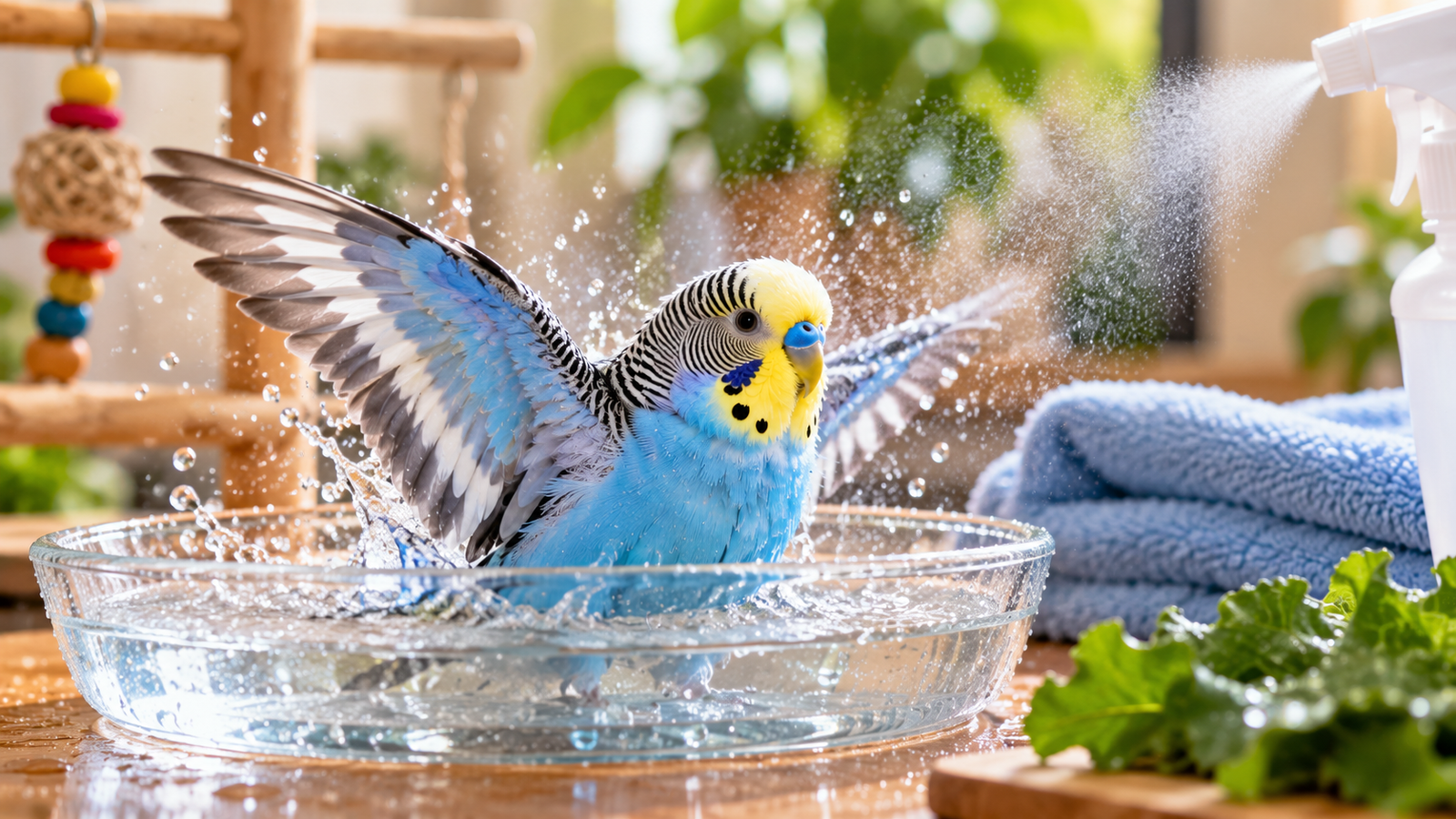
A bird that wants to bathe will often fluff its feathers, spread or lift its wings, lower itself into the water, turn from side to side and shake, then preen hard afterward. Some get excited at the sound of running water or the sight of a spray bottle.
Stop and try something else another day if your bird keeps trying to get away, freezes, alarm-calls, or starts breathing fast. Bathing should never turn into restraint.
Five ways to offer a bath
1. A shallow dish
Many small birds, and finches and canaries especially, prefer to bathe themselves. Fill a heavy, stable dish with clean lukewarm water shallow enough for the bird to stand in comfortably, roughly up to its legs. Put it in a large enough cage, clip it securely to the cage, or set it on a supervised play area. Don’t place it under a favorite perch, where droppings will land in it. Take it out once the bird is done.
2. Fine misting
Many parrots love being misted. Use a new spray bottle kept only for your bird; never reuse one that has held cleaners, plant sprays or perfume. Set it to the finest mist and aim above the bird so the droplets fall like light rain, rather than spraying into its face. Start with a few sprays. If the bird lifts its wings, turns toward the mist or fluffs up, carry on. If it moves away, stop. Never chase a bird around its cage with a bottle; that quickly makes the bottle, and you, frightening.
3. Sharing your shower
Some larger parrots enjoy a shower perch, usually a suction-cup perch fixed well away from the main spray. The bird gets gentle droplets and steam without the force of the showerhead, which can frighten or hurt it. Check the perch is secure, keep the water only warm, and keep shampoo, soap and body wash well away from the bird. Never leave a bird alone in the bathroom.
4. Wet leafy greens
Called leaf bathing, this suits many smaller birds. Rinse large leaves of a bird-safe green such as kale, Swiss chard or collard greens, then hang or clip them in the cage while still dripping, or spray them once in place. The bird rubs and flutters through the wet leaves. Remove any leftovers before they wilt.
5. A gently running faucet
Some curious parrots like to play under a slow trickle from the kitchen or bathroom tap. Keep the flow low and lukewarm, make sure the sink is clean and free of cleaning products, and stay with the bird the whole time.
Try one method at a time over several days to see which one your bird enjoys. Once you know its favorite, bath time gets much easier.
Safety note: birds can drown in surprisingly little water. Keep toilet lids down, sinks and buckets empty, and pots of water covered whenever your bird is out of its cage, and never leave a bird alone with any bath deeper than a shallow dish.
Water temperature and what not to add
Use clean water that feels lukewarm or close to room temperature. Avoid hot or very cold water. If your tap water is heavily chlorinated, VCA suggests bottled water for misting.
Healthy birds need nothing but plain water. Birds swallow whatever is on their feathers as they preen, so even products that seem mild on skin can harm them.
Important: never use human shampoo, pet shampoo, soap, conditioner, essential oils, perfume or scented bird bath sprays unless an avian vet has prescribed a specific product. Plain water does the job.
Drying off afterward
Most healthy birds don’t need towel-drying. Let your bird shake, preen and dry naturally in a warm room, away from cold drafts, air-conditioning vents, fans and open windows in cool weather. Many birds like to preen in a patch of gentle sunlight after a bath, but they must always be able to move into shade, as a cage in strong sun can overheat quickly.
Bathe in the morning or early afternoon so the feathers are dry well before the bird settles for the night. A damp bird in a room that cools down after dark can get chilled. Our guide on how much sleep pet birds need covers the bedtime side of things.
Hair dryers are rarely needed. VCA treats one as optional if used gently on a low setting and kept from overheating, and stopped if the bird is frightened. For most birds, air-drying in a warm room is simpler and less stressful.
Notes for common pet birds
Budgies usually like to choose when to get in. A shallow dish, wet greens or a light mist all work; don’t pick a budgie up and put it in the water. Many show more interest in bathing during warm weather.
Cockatiels, cockatoos and African greys produce powder down, a fine dust from special feathers. A dusty look is normal and not a sign of a dirty bird. Regular misting or bathing reduces loose dust and encourages preening, but it won’t stop the powder entirely.
Finches and canaries generally prefer a bath dish to being sprayed. Clean the dish thoroughly after each use.
Doves and pigeons like a wide, shallow container where they can stand, crouch and splash.
If your bird is afraid of water
Never force it. Start by putting a shallow dish near the bird without expecting anything. If it is comfortable watching you, dip your fingers in and splash gently. Another day, offer wet greens, or try one very light mist from a distance above the bird. Progress can take days or weeks, and a bird that can choose to come and go will usually warm to water sooner than one that is pushed.
Never spray a bird to stop screaming, biting or chewing. Using water as punishment makes it afraid of baths and of the person holding the bottle.
Keeping baths clean
Bath water gets dirty fast with feathers, food and droppings. Empty it after each session, wash and rinse the dish, and let it dry. If you use a clip-on bathing chamber that stays on the cage, clean it daily. Many owners find it easier to offer the bath for a short time and then remove it.
If your bird insists on bathing in its drinking bowl instead, that is normal. Just replace the water straight afterward. For where dishes and perches should go, see how to set up a bird cage.
Bathing, molting and feather problems
During a molt, regular baths help soften the keratin sheaths on new pin feathers and support the extra preening your bird will do. Don’t pick at pin feathers yourself; growing feathers have a blood supply and can bleed. If a blood feather breaks and keeps bleeding, follow the steps in bird first aid basics and call your vet.
Merck notes that bathing encourages normal preening and can help discourage feather plucking. It is not a treatment for plucking, though. Feather damage can come from skin disease, infection, parasites, pain, diet, hormones or stress, and any bird that starts pulling or chewing its feathers needs an avian vet. Baths also don’t treat mites. Never put flea products made for dogs or cats, insect powders or essential oils on a bird.
When to skip the bath and call a vet
Don’t routinely bathe a sick, weak or fluffed-up bird unless an avian vet tells you to. Ill birds struggle to stay warm, balance and preen, and the stress can make things worse. Baby birds that are not fully feathered or weaned have different needs too, so ask an avian vet for advice.
Urgent: a bird breathing with its beak open, bobbing its tail hard with each breath, sitting on the cage floor or struggling for air needs emergency veterinary care. Don’t delay to bathe or clean it.
If oil, glue, paint, grease or a household chemical gets on the feathers, don’t try soap or solvents. Call an avian vet or an animal poison service and say exactly what the substance was. Our list of household dangers for pet birds covers the common culprits.
A bird that usually loves water but suddenly loses interest may just not feel like it today. Pay closer attention if that change comes with a smaller appetite, weight loss, fluffed feathers, less activity, odd droppings, breathing changes or less preening. Together, those can point to illness. See signs of illness in pet birds for what to look for.
Frequently asked questions
Can I bathe my bird every day?
Yes, many healthy birds that enjoy water can be offered a bath daily. The key is that the bird chooses whether to use it. Some species and individuals are happy with far less, so follow your bird’s lead.
How often should I mist my bird?
Start with once or twice a week using a fine mist aimed above the bird. If it lifts its wings and leans into the spray, you can offer misting more often, up to daily for birds that love it.
Do birds need soap or shampoo?
No. Plain lukewarm water is all a healthy bird needs. Birds swallow residue while preening, so soap, shampoo, oils and scented sprays should only ever be used if an avian vet prescribes a specific product.
Why does my bird bathe in its water bowl?
Because the bowl is there and bathing comes naturally. Many birds ignore a special bath and squeeze into their drinking dish instead. It is harmless, but change the water right afterward so your bird isn’t drinking dirty water.