
A purring cat curled on your lap is one of the nicest parts of living with a cat. Most of the time, purring means exactly what it seems to: a relaxed, contented cat. But cats also purr when they want something, when they’re nervous at the vet, and sometimes when they’re unwell or in pain. Reading the purr in context, along with the rest of your cat’s body language, tells you far more than the sound alone.
In short: Cats purr mostly when they’re content and feel safe. They also purr to ask for food or attention, to bond with their kittens, and to comfort themselves when stressed, hurt or ill. A purr with relaxed body language is a good sign. A purr together with hiding, not eating, fast breathing or other changes can be a sign your cat needs a vet.
How do cats purr?
Purring is a soft, rumbling vibration that cats make as they breathe both in and out, which is why it can go on for so long without a pause. Researchers believe it comes from rapid movements of the muscles in the voice box, controlled by the brain. A 2001 study in The Journal of the Acoustical Society of America measured domestic cat purrs at roughly 20–150 Hz, a low, steady hum.
Kittens start purring within a few days of birth. At that age they can’t see or hear well, and purring helps mother and kittens stay connected while nursing. The mother purrs too, which may help guide her kittens to her.
Why cats purr
Contentment and feeling safe
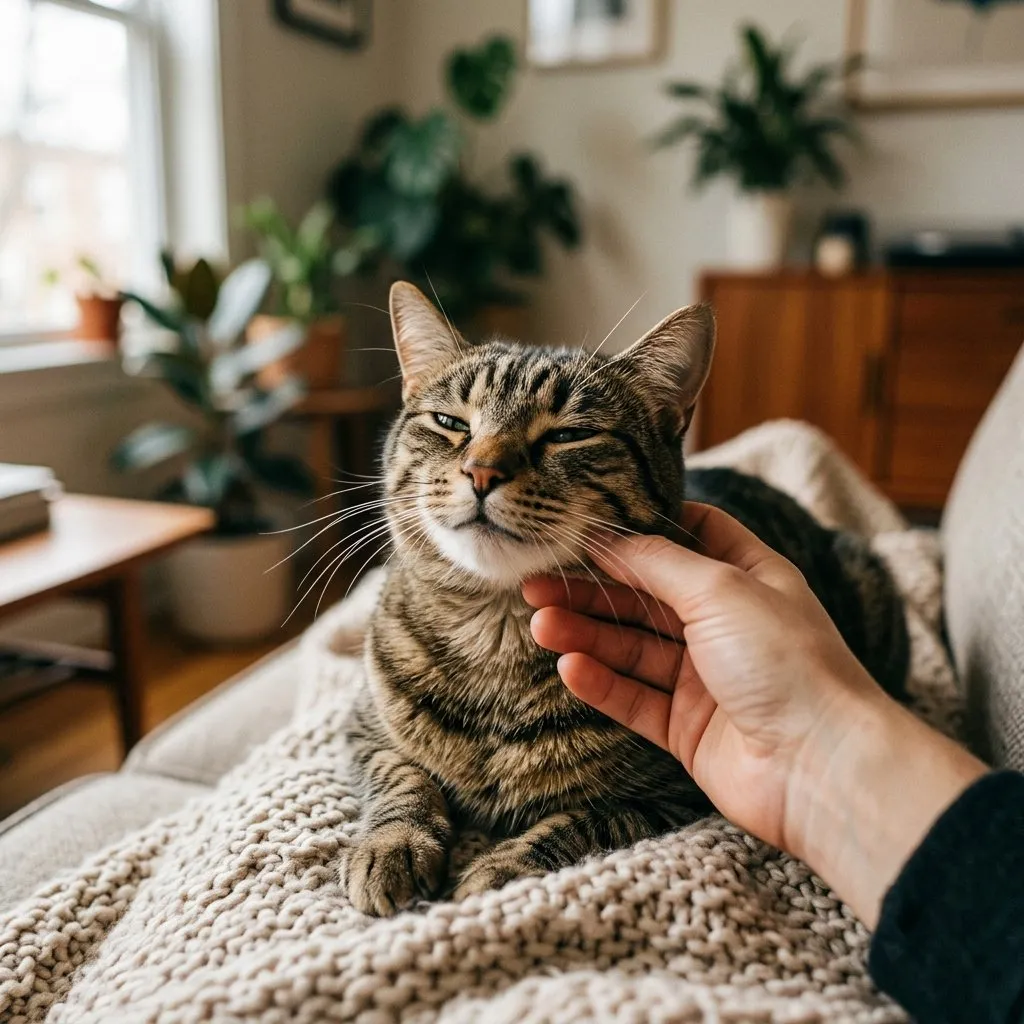
This is the most common reason. Cat behavior consultant Mikel Delgado, quoted in Live Science, says that around 90% of the time purring is positive, meaning the cat is pleased and feels safe. You’ll often hear it during stroking, lap time, kneading or as a cat drifts off to sleep. Our guide on why cats knead covers another behavior that often goes with it.
Asking for something
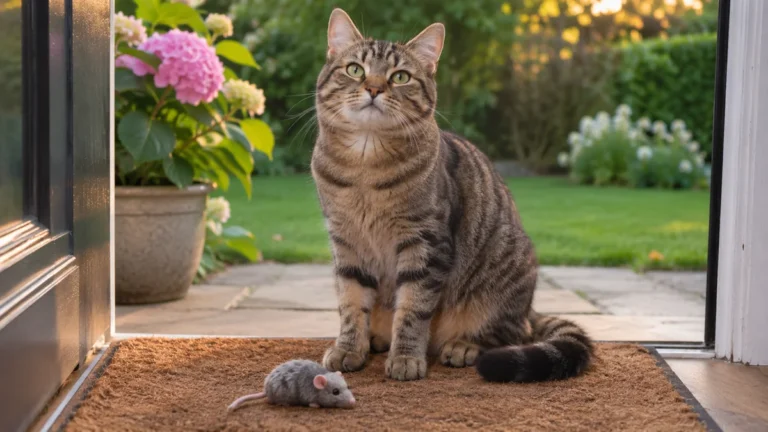
Some cats have a special purr for getting what they want, often at breakfast time. A 2009 study published in Current Biology found that cats use a “solicitation purr” when asking for food. It has a higher-pitched, cry-like sound mixed in, which people find more urgent and harder to ignore than a normal purr. If your cat purrs loudly at you before meals, that’s probably what you’re hearing. Our guide on how often to feed a cat may help you set a routine that reduces early-morning demands.
Comforting themselves
Cats also purr when they’re stressed, frightened, injured or ill, including at the vet and sometimes near the end of life. Cornell veterinarian Dr. Kate Anderson suggests it may help a sick or scared cat soothe itself. So a purr doesn’t always mean a cat is happy.
Does purring help cats heal?
You may have read that purring can heal bones or ease pain. The idea comes from the fact that purr frequencies overlap with some frequencies used in human therapies for bone and muscle. It’s an interesting theory, but it hasn’t been proven in cats. Live Science reports there’s no strong evidence for or against it, and Delgado notes there has never been a study showing that purrs have special healing powers. Purring isn’t a substitute for treatment.
How to tell what your cat’s purr means
Look at the whole cat, not just the sound.
| What you see with the purr | What it probably means |
|---|---|
| Relaxed body, slow blinks, soft eyes, kneading | Contented and comfortable |
| Weaving around your legs or staring at you near mealtimes | Asking for food or attention |
| Crouched, tense, ears back, at the vet or during handling | Stressed or frightened, self-soothing |
| Hiding, not eating, hunched, breathing fast | Possibly unwell or in pain |
When purring can be a warning sign
Because cats hide illness well, a purring cat can still be unwell. Contact your vet if your cat is purring but also:
- Hiding more than usual or not coming to greet you
- Eating less, or hasn’t eaten for a day
- Breathing fast, breathing with an open mouth, or panting
- Sitting hunched or reluctant to move
- Straining in the litter box or having other litter box changes
- Not grooming, or grooming one area too much
Urgent: open-mouth breathing, straining to pee with little or nothing coming out, collapse or a cat that can’t stand needs a vet straight away, whether or not it is purring.
Our guides on signs your cat is in pain and signs your cat is sick explain what else to look for.
What if my cat doesn’t purr?
Some cats purr loudly, some so quietly you can only feel it, and a few rarely seem to purr at all. A quiet cat isn’t necessarily unhappy. It may show contentment in other ways, such as slow blinking, kneading, head rubbing or following you around. What matters more is a change: a cat that usually purrs and suddenly stops, along with other changes in behavior, is worth a vet check.
Frequently asked questions
Does purring always mean a cat is happy?
No. Most purring is a sign of contentment, but cats also purr when asking for food, when stressed or frightened, and when ill or in pain. Look at your cat’s body language and behavior to understand what the purr means.
Why does my cat purr loudly in the morning?
It may be a “solicitation purr,” which cats use when asking for food or attention. Research found it includes a cry-like sound that people find hard to ignore. A consistent feeding routine can help.
Can a cat purr when it is sick or in pain?
Yes. Cats sometimes purr when injured, unwell or stressed, possibly to soothe themselves. If your cat is purring but also hiding, eating less or breathing differently, contact your vet.
Is it true that cat purring can heal bones?
It’s an unproven theory. Purr frequencies overlap with some used in human bone and muscle therapies, but there’s no strong evidence that purring heals cats or people.